Learn the 4H way · Your next step
4H curriculum & free guide
Happy · Healthy · Heavy · Harmony
Build your knowledge from colony life to a closed-loop apiary, with nature and personal awareness woven through four learning modules.
The curriculum
What you learn with Mark
Module 1
The Foundations of 4H Beekeeping
Learn what each H means and how the four work together. Colony care starts with the bees, their food and their surroundings, not a score.
- Choose a suitable hive site, basic equipment and protective clothing with Mark
- Learn to build and repair boxes and frames using suitable wood, safe tools and untreated interiors
- Understand the queen, workers, drones and the brood cycle
- Explain all four Hs in plain words
- Distinguish honey for energy from pollen for protein and fats
- Protect brood-side bee bread, natural comb and the propolis envelope
- Recognise when observation is enough and when bees need help
- Connect patient apiary practice with reflection, personal awareness and care in daily life
Module 2
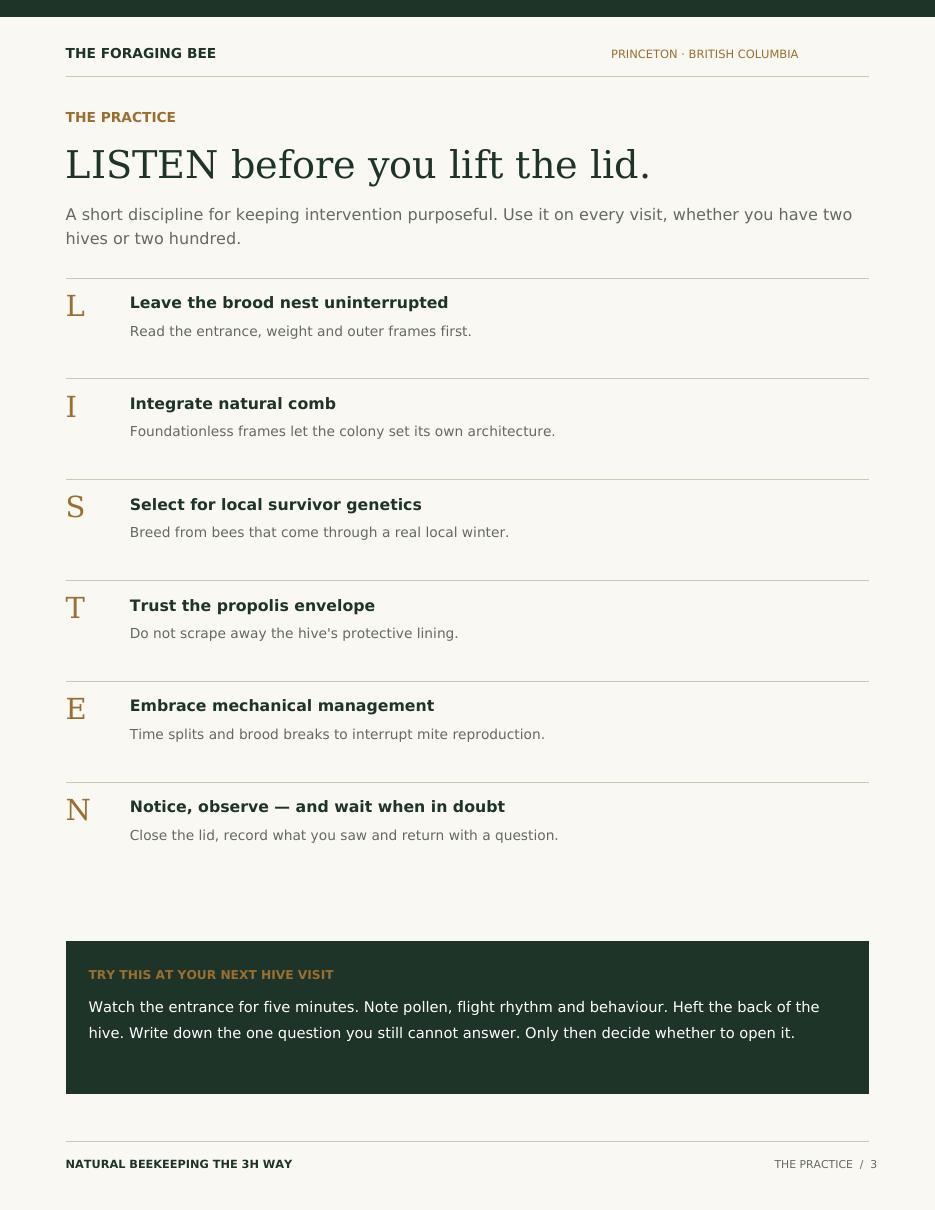
The LISTEN Principle
Learn a purposeful hive visit: start outside, ask a clear question and disturb the brood nest only when needed.
- Read entrance activity, pollen, sound, weather and safe hive heft
- Separate clues from confirmed brood and health evidence
- Handle frames with appropriate protection and preserve brood warmth
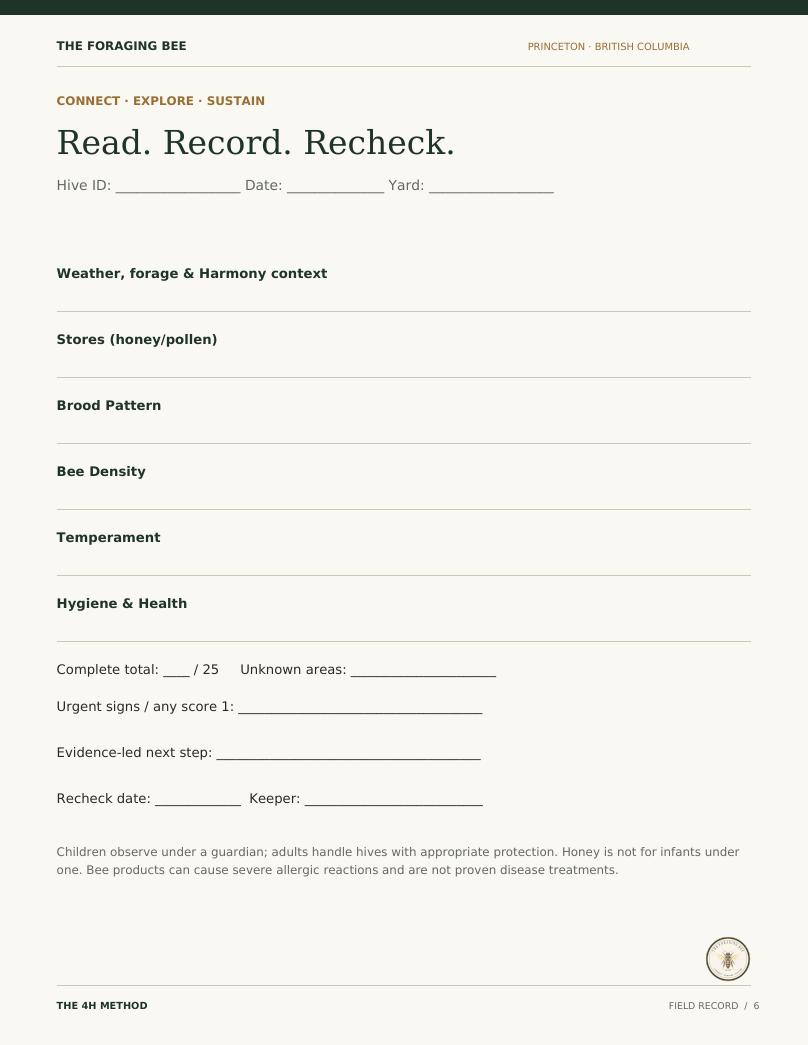
- Keep a short observation, action and follow-up record; use the scorecard only as a supporting tool
- Document forage, food, queen lineage and seasonal outcomes, then review what changed
Module 3
Natural Comb & Closed-Loop Queen Rearing
Connect your own comb, breeder selection, queen rearing and young colonies into a sustainable yard. Progress from foundations to advanced supervised practice; neither natural comb nor propolis replaces health checks.
- Set up foundationless frames and protect the bees’ comb
- Select breeders using health, temperament, winter survival and spring recovery across repeated records
- Understand the two-box 10-over-10 cell builder, starter, finisher and queen-cell sequence with Mark
- Learn queen castles, mating nucs, planned splits and brood donors with skilled supervision
- Track queen lineage and mating outcomes; protect genetic diversity without claiming control of open mating
- Recognise health concerns and never move resources from suspected diseased colonies
Module 4
Harmony & Cold-Climate Winterization
Connect the colony to its landscape. Plan around the forage, rain, cold and wind at the actual hive site, not a universal calendar.
- Map local bloom and pollen availability, including weather-related gaps
- Learn responsible collection, handling and storage of your own pollen during abundance; never strip essential colony food
- Leave reachable winter honey and protect pollen stores needed for brood rearing
- Match insulation and moisture management to colony strength and the site
- Keep hive numbers within forage capacity and protect native pollinators
- Check winter food risk without unnecessarily opening a cold brood nest
- Plan overwintered nucs and next-season resources within donor strength and local forage capacity
Inside the guide
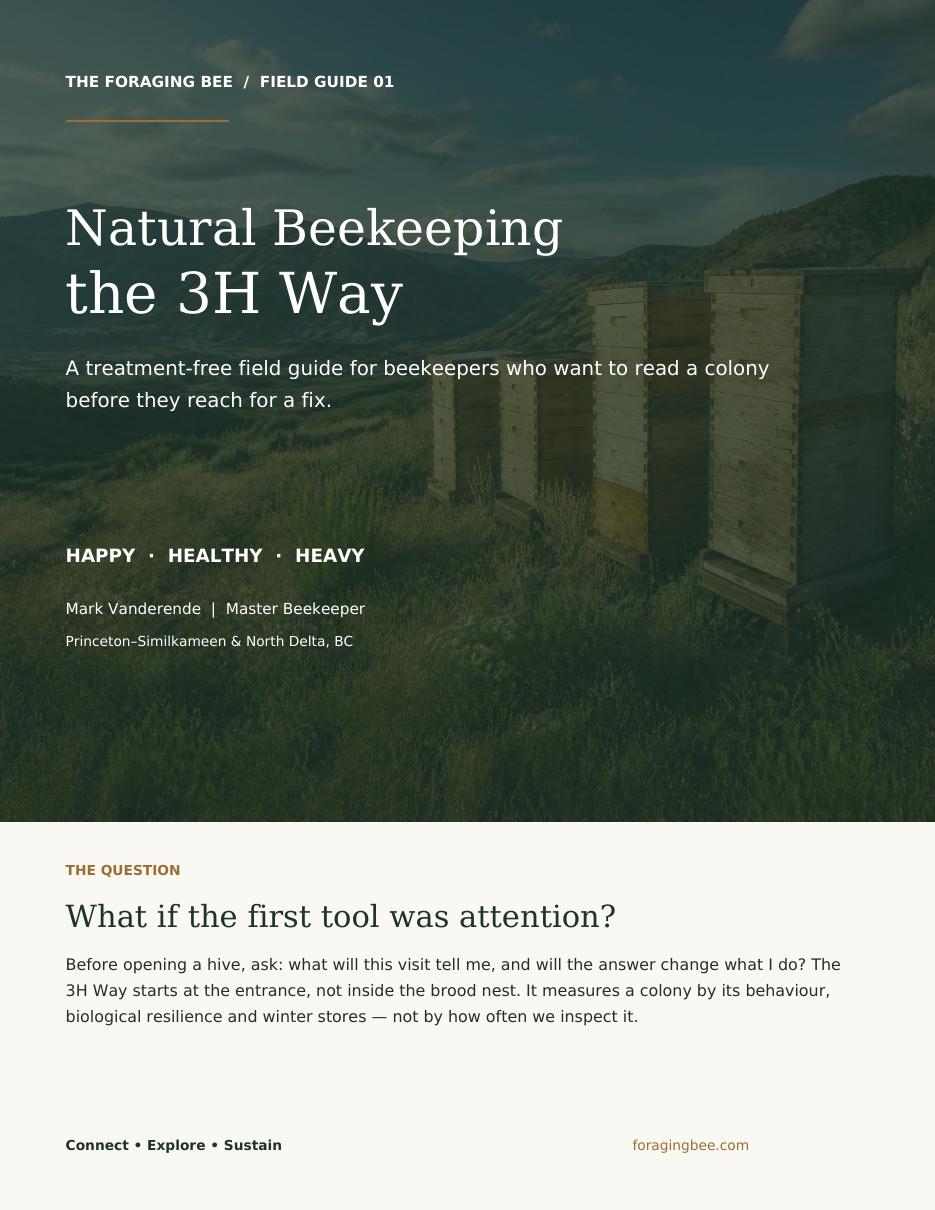
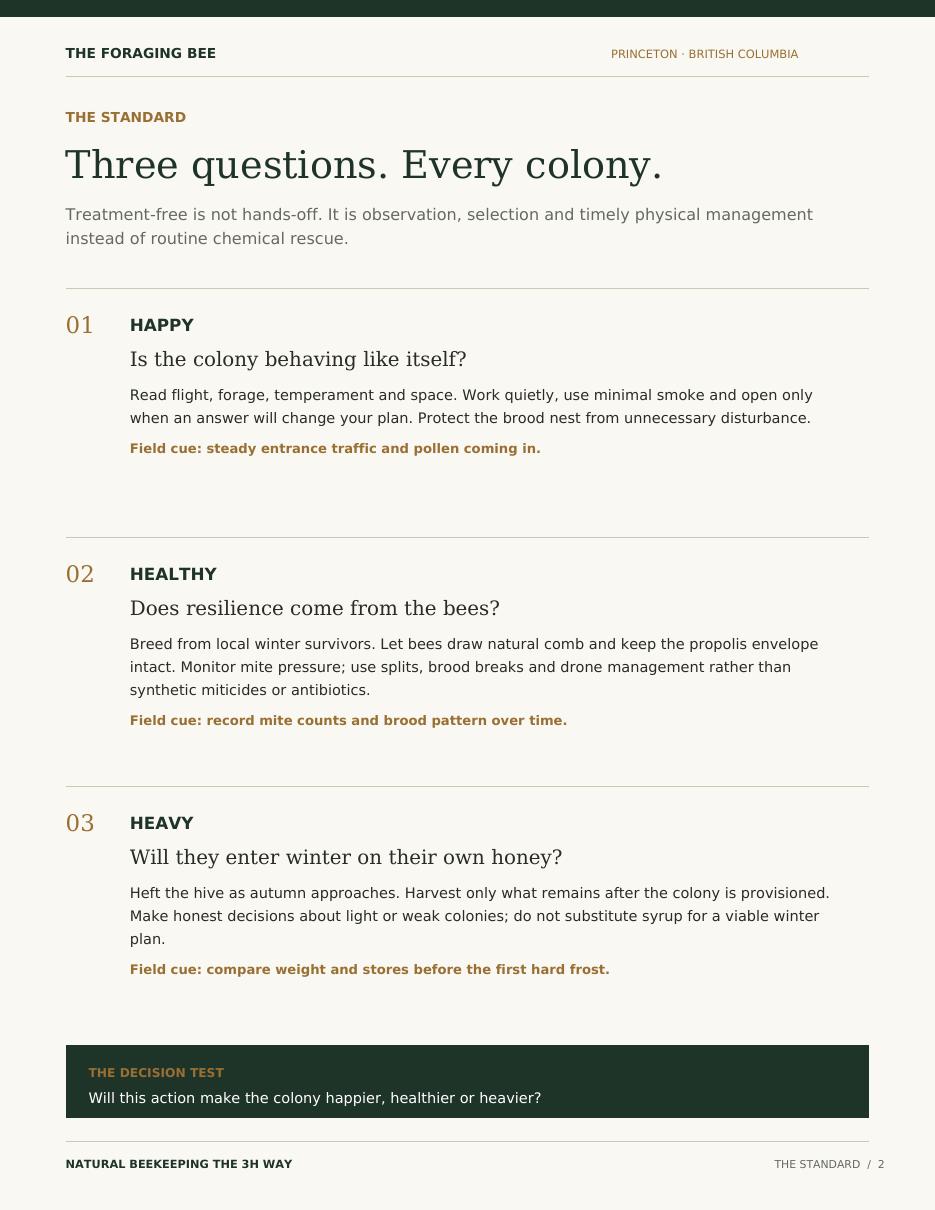
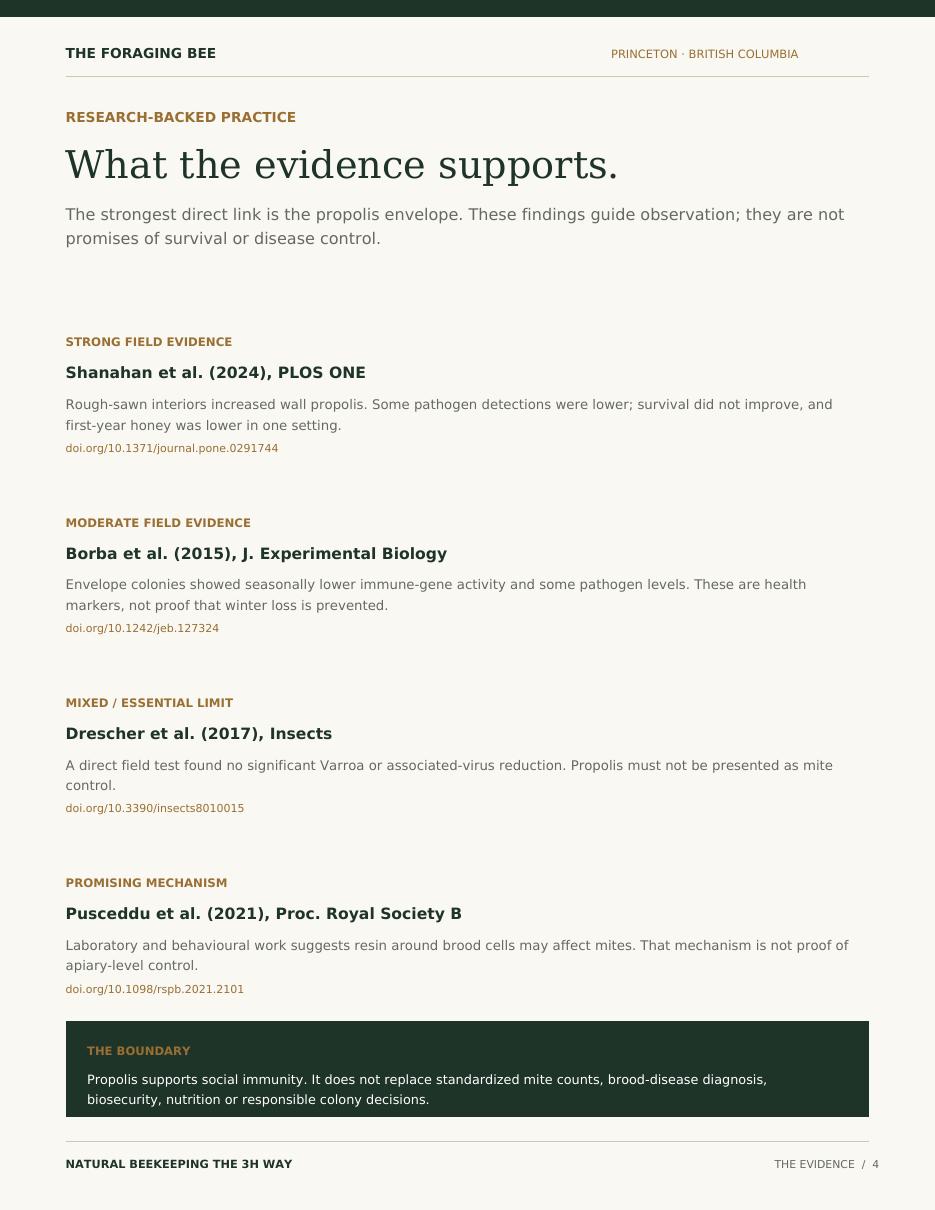
Six pages for the next hive visit.
The four Hs & pollen
Happy, Healthy, Heavy, Harmony — honey for energy, pollen for growing bees.
The LISTEN practice
Look, Inspect, Sound, Touch, Evaluate, Navigate — evidence before intervention.
Curriculum & supporting tools
Four learning modules, with a scorecard to record evidence — not replace the teaching.
Read it here
The 4H field guide