4H Seasonal Library
Drones Flying: When the Split Window Really Opens
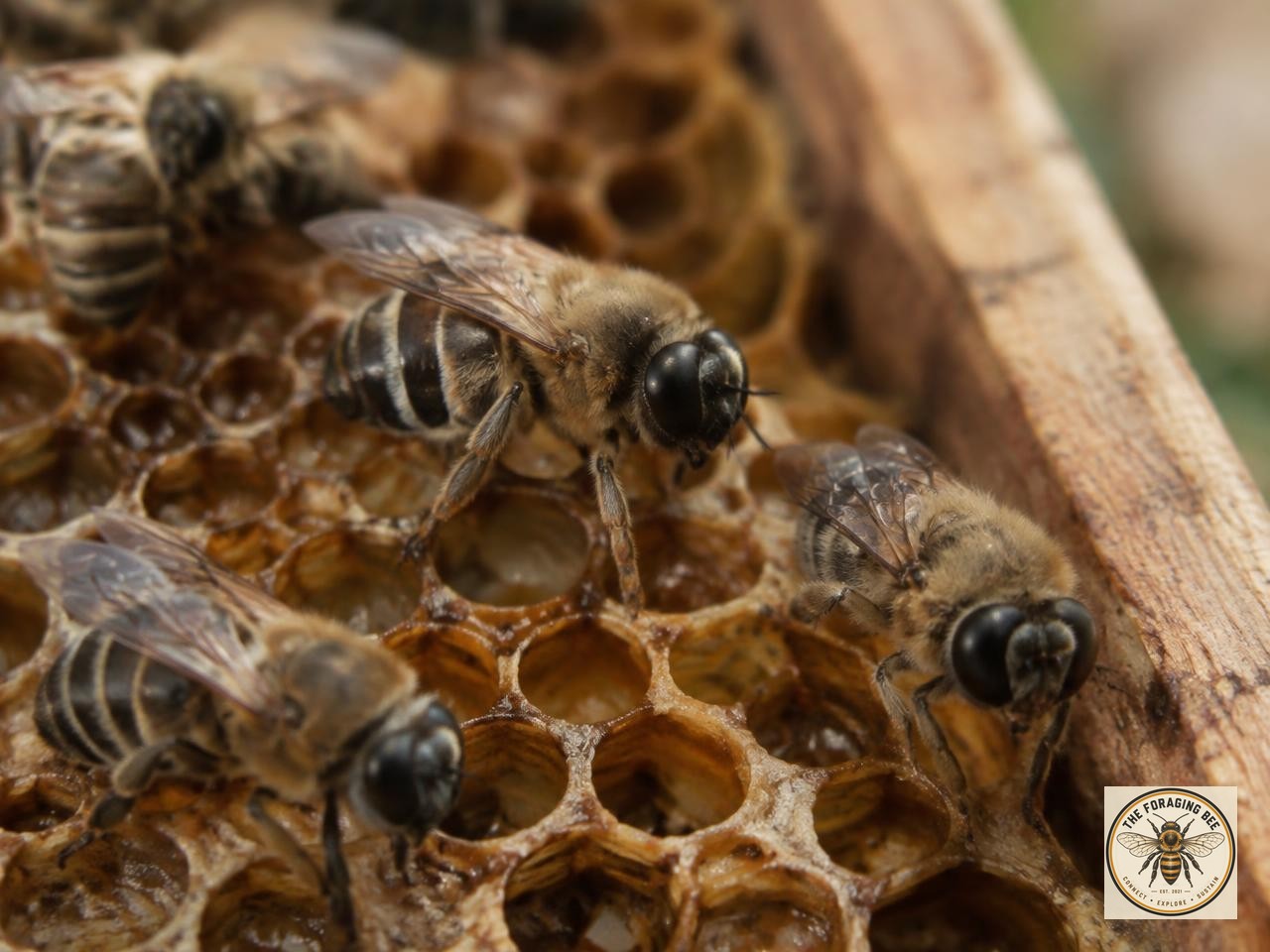
Swarm season: learn to read mature drones; drone congregation weather; queen cells; colony strength before choosing an action.
Mark Vanderende · May 5, 2026Updated October 11, 2026
READ THE ENVIRONMENT
Mature drones; drone congregation weather; queen cells; colony strength. These are the signals that matter before the hive tool comes out. A calendar can remind us to look, but it cannot tell us what a living colony is experiencing.
WHAT THE COLONY IS SAYING
A walk-away split needs enough bees, brood, food and mating opportunity. Drone flight is a biological signal that the mating landscape is opening. In the 4H method, this is read through Healthy: the observation must lead to a reasoned decision, not a routine manipulation. Record what you saw before acting, then record the result.
TWO YARDS, TWO EXPRESSIONS
Delta may show drones earlier, but rain can close mating windows. Princeton can start later and then accelerate rapidly. The lesson is not to choose one regional date. It is to recognize the same biological need through different local signals. Temperature, wind, soil moisture, bloom, elevation and surrounding land use all change the colony's timing.
THE 4H DECISION
Ask four questions. Is the colony calm enough to work without adding stress? Is brood, queen status and measured health moving in the right direction? Is there enough food for the next environmental gap? Is the apiary in step with local forage, weather and responsible growth? Only harvest a surplus after leaving abundant winter stores. Check queen line, mite pressure, winter survival and spring new bees; if danger is evident, diagnose and act promptly rather than waiting. Preserve the propolis envelope as support for social immunity, never as a substitute for monitoring.
READINESS IS MORE THAN SEEING A DRONE
Drone presence is one part of the mating picture, not a guarantee that a new queen will mate successfully. Weather, maturity and the condition of both sides of the split matter. Before moving anything, identify the purpose of the split and the queen plan. A beginner should work with a mentor for this decision, not treat a seasonal article as a complete queen-rearing recipe.
Record what the parent retains as carefully as what the new colony receives. Both need an adequate workforce and food. Follow up on queen establishment and population development without routine queen hunting. A split is not successful just because it occupies a new box; the useful result is two functioning colonies with a credible path to winter strength.
HIVEVERITY: KEEP THE REASON WITH THE READ
4H sets the outcome: Happy, Healthy, Heavy, Harmony. HiveVerity is the reading and scoring system that keeps the evidence beside the decision. Use LISTEN: Look, Inspect, Sound, Touch, Evaluate, Navigate. The five audit areas are Stores, Brood Pattern, Bee Density, Temperament and Hygiene & Health, scored 1–5 only when conditions and sufficient evidence allow. Harmony adds the landscape, microclimate and forage context. Record what you could not assess; do not invent a score to fill a gap.
Keep the hive identifier, date, weather, observation, action and follow-up together. A complete score out of 25 helps organize a decision; any score of 1 or urgent sign overrides the total; it is not a health certificate or proof of a cause. These are practical teachings within Mark’s framework, not a claim that familiar beekeeping practices are exclusive inventions. The next visit should show whether the decision helped.
FIELD NOTE
At the next visit, write the cue, the colony response, the action taken—or the decision to do nothing—and what changed by the next check. That sequence turns experience into a local calendar.
Read these signals
- • Mature drones
- • drone congregation weather
- • queen cells
- • colony strength