4H Seasonal Library
First Frost Is a Signal, Not a Deadline
Autumn: learn to read rodent activity; first sustained frost; wind; entrance traffic before choosing an action.
Mark Vanderende · November 19, 2026
READ THE ENVIRONMENT
Rodent activity; first sustained frost; wind; entrance traffic. These are the signals that matter before the hive tool comes out. A calendar can remind us to look, but it cannot tell us what a living colony is experiencing.
WHAT THE COLONY IS SAYING
Install guards and adjust entrances when the local conditions require them. The cue is a change in risk, not a date printed for another region. In the 4H method, this is read through Happy: the observation must lead to a reasoned decision, not a routine manipulation. Record what you saw before acting, then record the result.
TWO YARDS, TWO EXPRESSIONS
Princeton usually reaches the signal first. Delta's rodents, rain and longer flight season require a different balance. The lesson is not to choose one regional date. It is to recognize the same biological need through different local signals. Temperature, wind, soil moisture, bloom, elevation and surrounding land use all change the colony's timing.
THE 4H DECISION
Ask four questions. Is the colony calm enough to work without adding stress? Is brood, queen status and measured health moving in the right direction? Is there enough food for the next environmental gap? Is the apiary in step with local forage, weather and responsible growth? Only harvest a surplus after leaving abundant winter stores. Check queen line, mite pressure, winter survival and spring new bees; if danger is evident, diagnose and act promptly rather than waiting. Preserve the propolis envelope as support for social immunity, never as a substitute for monitoring.
PROTECT ACCESS WITHOUT CLOSING THE COLONY IN
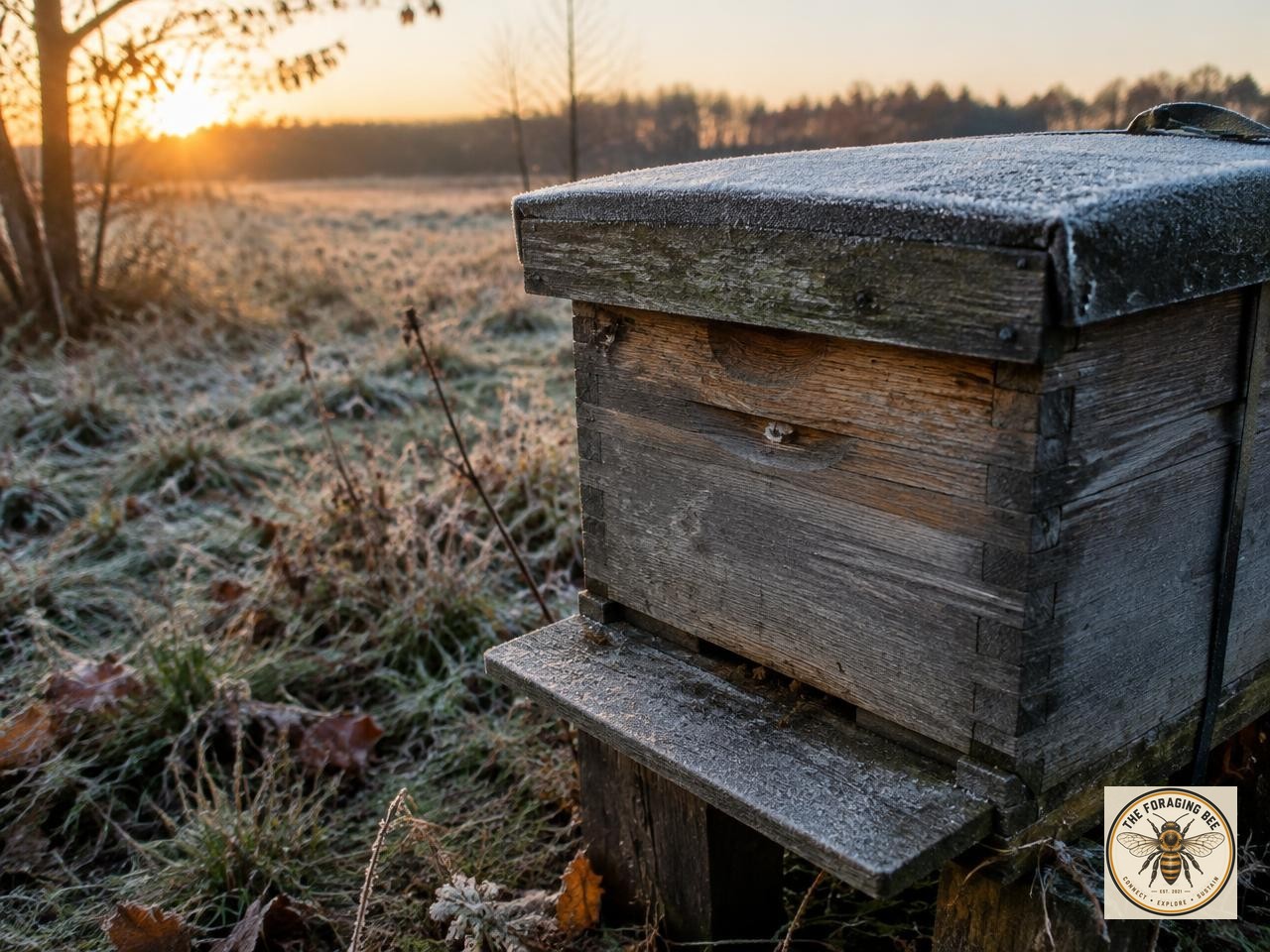
A frosty morning is a useful reminder to examine changing risks. Check guards, access, roof security and exposure from outside first. Make sure protective equipment is correctly fitted and does not obstruct the bees’ path. Match any adjustment to local activity and weather rather than sealing every colony into the same arrangement.
After wind, snow or rain, revisit the equipment when safe. Look for blocked access and water entry without forcing a cold inspection. Mark’s 4H approach does not use routine tar-paper wrapping as a substitute for a strong, well-provisioned colony. That does not remove the need for sound equipment and a locally suitable moisture plan. Record what changed and how the entrance functioned afterwards.
HIVEVERITY: KEEP THE REASON WITH THE READ
4H sets the outcome: Happy, Healthy, Heavy, Harmony. HiveVerity is the reading and scoring system that keeps the evidence beside the decision. Use LISTEN: Look, Inspect, Sound, Touch, Evaluate, Navigate. The five audit areas are Stores, Brood Pattern, Bee Density, Temperament and Hygiene & Health, scored 1–5 only when conditions and sufficient evidence allow. Harmony adds the landscape, microclimate and forage context. Record what you could not assess; do not invent a score to fill a gap.
Keep the hive identifier, date, weather, observation, action and follow-up together. A complete score out of 25 helps organize a decision; any score of 1 or urgent sign overrides the total; it is not a health certificate or proof of a cause. These are practical teachings within Mark’s framework, not a claim that familiar beekeeping practices are exclusive inventions. The next visit should show whether the decision helped.
FIELD NOTE
At the next visit, write the cue, the colony response, the action taken—or the decision to do nothing—and what changed by the next check. That sequence turns experience into a local calendar.
Read these signals
- • Rodent activity
- • first sustained frost
- • wind
- • entrance traffic