Honey, wax & pollen processing
Processing Beeswax: Make Good Use of Your Cappings
Sort known-source wax, render it with controlled indirect heat and store it clearly—without treating melting as sterilisation or a salve recipe.
Mark Vanderende · October 29, 2026
WAX IS PART OF THE HARVEST STORY
The bees built the comb before the beekeeper collected a crop. Saving suitable wax is another way to respect that work. Fresh honey cappings can become useful wax for crafts or other appropriately assessed uses, while sound drawn comb may be more valuable kept intact for the colony.
Do not melt every frame because a block of wax looks tidy. Decide what should remain as usable comb, what can be rendered from a known healthy source and what must be held out of circulation for health advice.
KNOW YOUR SOURCE
Keep cappings separate from older brood wax and from material of unknown history. Label the source and date. Dark old comb, contaminated material and wax from suspect colonies are not interchangeable with clean fresh cappings.
Rendering is not a disease decontamination procedure and cannot establish chemical purity. Do not feed recovered honey from uncertain sources to bees or assume a melted block is safe for every food, cosmetic or hive use. Suspected disease belongs with an inspector’s advice, not in the general wax pot.
DRAIN BEFORE THE WAX WORK
Let suitable cappings drain in clean covered equipment as part of the honey workflow, then set aside the wax for separate processing. Do not leave honey-wet wax exposed outside: it can encourage robbing and spread problems between colonies.
Keep wax-work utensils separate from your honey bottling tools. Plan a stable workspace with room for cooling moulds, safe handling and an appropriate response to fire or spills. Read the equipment instructions before starting.
CONTROLLED INDIRECT HEAT
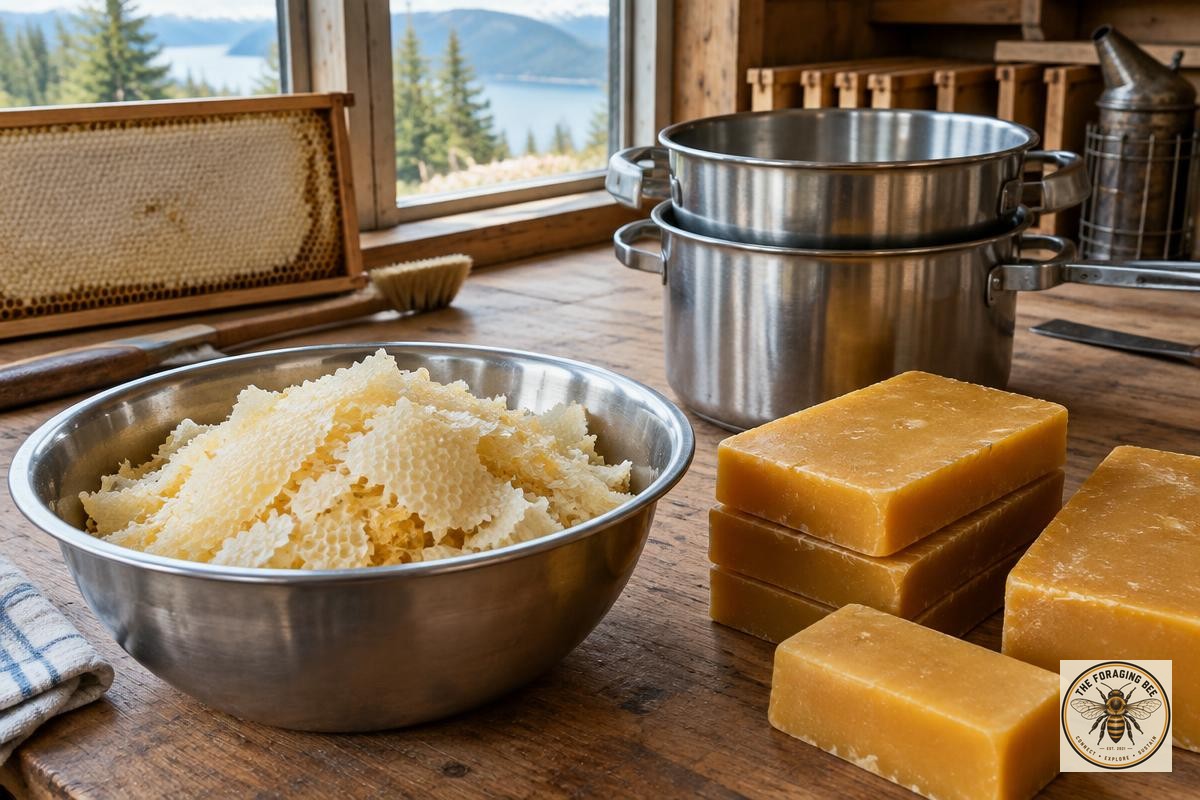
Beeswax is flammable. Use suitable equipment with controlled indirect heat, such as a correctly used double boiler, rather than putting wax over an open flame. Work slowly with only as much heat as needed for the task and stay with the process. Do not let the water bath boil dry.
Keep hot wax and hot water away from children and pets. Use suitable protection, stable containers and a clear handling route. Never pour water onto a wax fire. Know how to shut off heat safely and use the appropriate fire response; if you are unsure, learn beside someone experienced before attempting rendering.
An example photograph is not a temperature setting, equipment approval or complete operating procedure. Do not copy a setup without checking that your actual appliance, vessel and workspace are suitable.
SEPARATE DEBRIS, THEN LET IT COOL
Use suitable heat-tolerant equipment to separate debris, following an established supervised method. Handle hot vessels carefully and allow the wax to cool fully before removing it or handling the mould. Do not pour wax into plumbing: it can harden and block drains.
Label finished wax by source and intended use. Store it clean, dry and protected from contamination. Colour and smell may tell part of the story, but they do not prove purity, absence of residues or suitability for use on skin.
WAX IS NOT A MEDICAL CLAIM
A block of your own beeswax can be satisfying to make. It is not automatically a finished cosmetic or an approved ingredient in a production formula. Salves need confirmed formulations, safe ingredients, appropriate hygiene and applicable product requirements. This entry does not alter The Foraging Bee’s salve recipes or production records.
YOUR NEXT STEP
Begin with a small batch of known-source cappings and experienced help. Record how much usable wax you recovered and where it will go. Harmony includes making good use of the hive’s work while keeping people, bees and the workshop safe.
Sources and boundaries
Utah State University Extension describes low, indirect double-boiler heating.
Extension explicitly warns about beeswax flammability, burns and fire.