
Woodware & comb care
Winter Equipment Care: Keep Your Boxes and Comb Ready for Spring
Sort, clean, dry and protect empty hive equipment over winter while preserving useful propolis and keeping suspect comb out of circulation.
Mark Vanderende · October 29, 2026
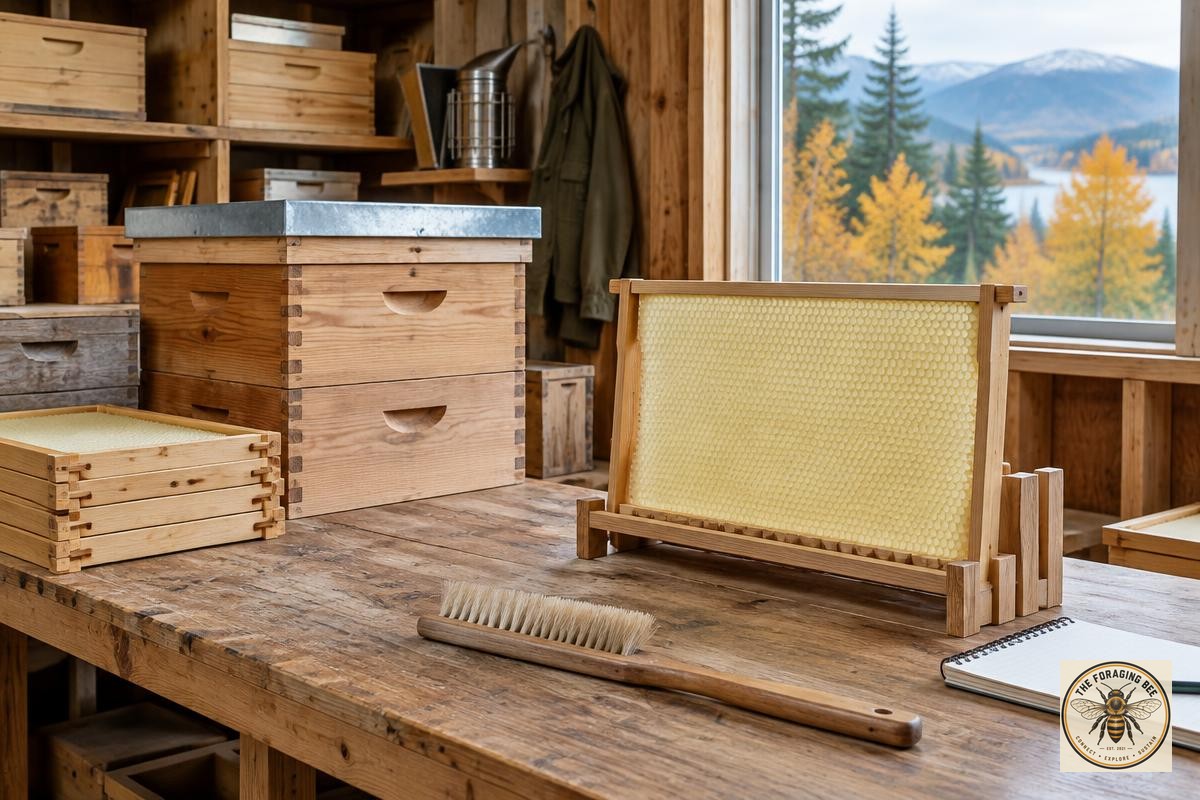
TWO DIFFERENT WINTER JOBS
An occupied winter hive and empty equipment in storage need different care. Do not dismantle a living colony to give its boxes a winter clean. Protect its shelter, entrance, reachable stores and calm, using outside-first checks and opening only for a justified question.
This entry concerns boxes and frames removed from service. Drawn comb is valuable: bees have already invested food and work in it. Looking after it saves that effort next season, but saving every old frame is not more important than keeping the yard healthy.
SORT BEFORE YOU CLEAN
Separate empty honey-super comb, brood comb and frames containing honey or pollen. Brood residues and pollen make comb especially attractive to wax moths. Mark the source hive and known health history. Keep equipment from an unexplained colony death or suspected disease apart from sound equipment.
Unusual brood remains, suspicious odours or unexplained collapse call for advice from a bee inspector or qualified local expert. Do not transfer suspect comb into another hive, extract it for food or assume that melting, freezing or a tidy appearance makes it safe. Disease decontamination is a separate, diagnosis-led task.
CLEAN FOR FUNCTION, NOT FOR SHINE
Learn to make and repair hive boxes and frames. Keep interiors untreated and suitably rough, protect the propolis lining and let bees build natural comb.
Remove loose debris and only the wax or propolis that prevents frames seating, boxes closing safely or equipment fitting correctly. Keep a healthy propolis lining rather than scraping the interior bare as routine housekeeping. Repair damaged joints and frame supports before storage; mark anything that needs work.
Clean food-contact extraction equipment separately according to its material and food-hygiene requirements. If empty wooden parts have become wet during cleaning or weather exposure, let them dry thoroughly before putting them away. Do not seal damp boxes into storage and hope winter will fix them.
KEEP COMB DRY AND PESTS OUT
Use a dry, secure storage place with appropriate ventilation and protection from rodents and insects. Plan protection around the type of comb and local pest pressure, not around a universal stack arrangement. Clean honey-super comb and older brood comb are not equally vulnerable.
Freezer protection may be useful for wax-moth stages, but a suitable procedure depends on freezer temperature, load and how thoroughly the comb cools. Follow locally verified guidance rather than a guessed number of hours. Protect treated comb against reinfestation afterwards. Freezing does not sterilise comb or make foulbrood-suspect equipment safe. An outdoor cold snap is not a validated freezer treatment.
Do not use household mothballs in hive equipment. Keep fuel, pesticides and other contaminating materials away from stored comb and honey-contact parts. Check stored equipment regularly for webbing, larvae, rodent damage, mould or damp—not just when spring arrives.
RETURN TO THE LIVING HIVE OUTSIDE FIRST
For colonies still occupied, watch that stands remain stable, roofs shed water and entrances remain usable without jolting the bees. Insulation and ventilation must fit the actual home and local weather. Good storage practice for empty comb is not an instruction to ventilate or rearrange a living brood nest indiscriminately.
YOUR NEXT STEP
Make three marked groups: ready for spring, repair before use, and hold for health advice. Record where each batch came from and when you last inspected it. Keeping boxes and comb in good condition over winter closes the loop without carrying avoidable problems into spring.
Sources and boundaries
Extension guidance distinguishes vulnerable brood/pollen comb and storage protection.
Routine cleaning and pest control are not disease decontamination.