Local pollinators
Meet the Western Bumble Bee: A BC Native Worth Protecting
How to recognize the western bumble bee, follow its one-year colony from a lone spring queen to autumn, and why this fuzzy native matters to our valleys and our planet.
Mark Vanderende · October 29, 2026
A BIG FUZZY NEIGHBOUR
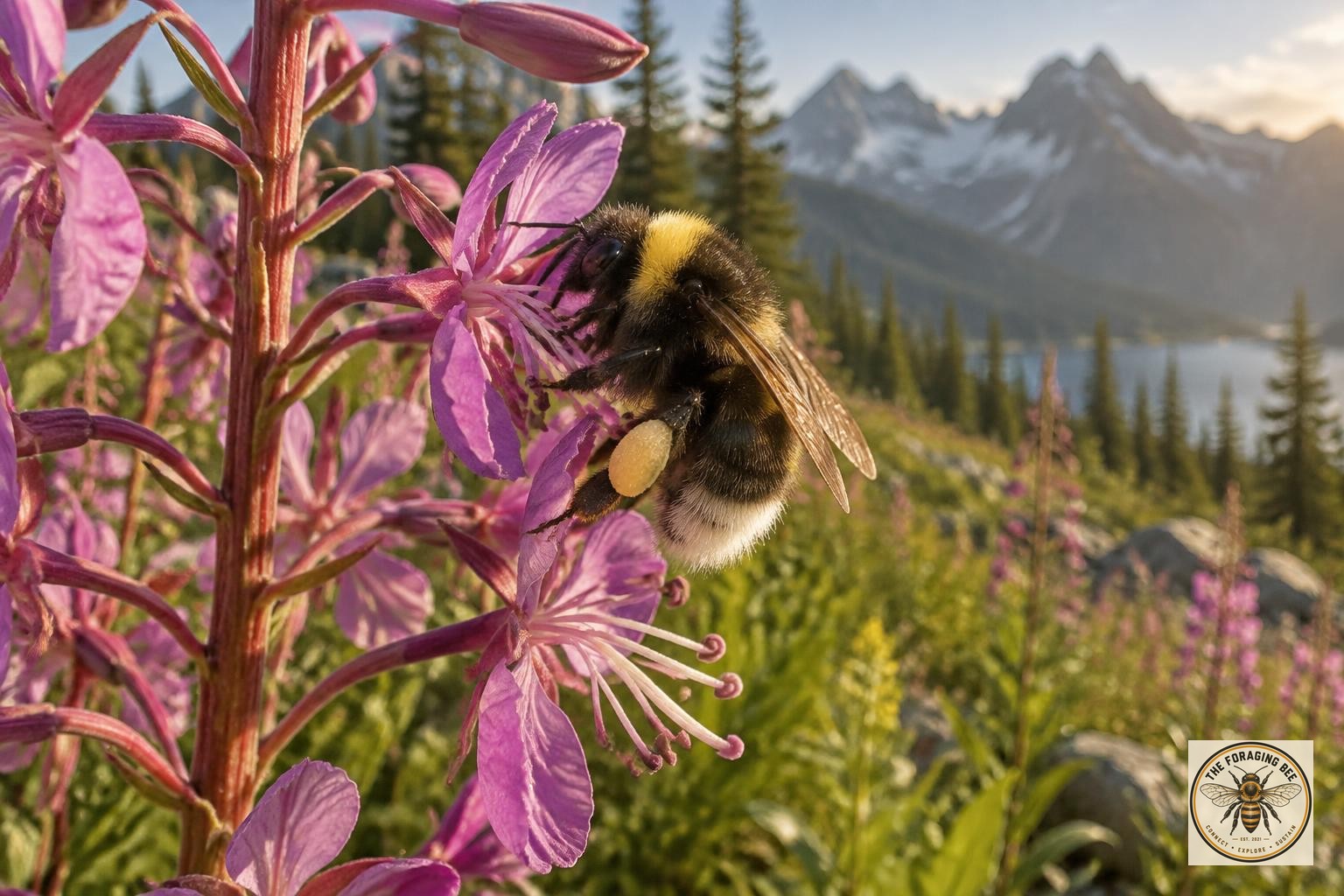
The western bumble bee (Bombus occidentalis) is a native bumble bee of western North America, including the interior of British Columbia. Once one of the most common bumble bees in the West, it has declined sharply in many areas, and in Canada its southern population is assessed as a species of conservation concern. Seeing one in your garden in the Okanagan–Similkameen–Princeton region is a quiet privilege.
HOW TO IDENTIFY IT
Look closely, from a gentle distance: • Size: a large, round, very fuzzy bee. • Head and thorax: mostly black, usually with a yellow band at the front of the thorax. • Abdomen: largely black with a clear white or cream tip at the very end of the body. That white tail is the best field mark. • Colour can vary between individuals, so a clear photo of the back and tail helps if you want a confident ID. • Females carry pollen in shiny pollen baskets on their hind legs.
If you photograph a bumble bee, you can share it with community science projects such as Bumble Bee Watch, where experts help confirm the species.
LIFE CYCLE: ONE COLONY, ONE YEAR
Spring – the queen wakes. Only mated queens survive winter, each alone in a small hole in the ground or under leaf litter. As the soil warms she emerges hungry and feeds on early blossoms like willow and currant.
Spring – founding the nest. She searches for a dry cavity, often an old rodent burrow. She builds a wax honey pot and a pollen lump, lays her first eggs on it and keeps them warm by shivering her flight muscles, much like a hen on eggs.
Summer – the workers. The first daughters become workers. They take over foraging while the queen stays home and lays. A western bumble bee colony stays small compared with a honey bee colony—often a few dozen to a few hundred bees.
Late summer – the next generation. The colony raises new queens and males. They leave to mate.
Autumn – the end and the beginning. The old queen, workers and males die as the weather cools. The newly mated queens dig in and wait for spring. The whole story starts again from a single bee.
WHY IT MATTERS TO OUR PLANET
Bumble bees fly in cool and cloudy weather when many insects stay home, and they can "buzz pollinate"—vibrating flowers such as blueberries and tomatoes to shake out pollen. They pollinate wildflowers, berries and the native plants that feed birds and other animals. When bumble bees disappear, plant communities change with them.
HOW YOU CAN HELP
• Leave some bare ground, leaf litter and undisturbed corners for nesting and winter queens. • Plant blooms from early spring to late autumn: willow, currant, lupine, fireweed, goldenrod and asters. • Avoid pesticides, especially on flowers in bloom.
THE 4H VIEW
A healthy hive does not live alone. In 4H terms, a thriving native bumble bee is Harmony in the landscape: proof that the land around your apiary can feed more than honey bees.
FIELD NOTE
Note the date you see your first big spring queen. Over the years, it becomes your own local signal that the season has turned.
Sources and boundaries
Status, range and decline of the species in Canada.
Community science project for photo-based bumble bee identification.
Life cycle, threats and habitat guidance.