Local pollinators
The Western Tiger Swallowtail: BC’s Golden Valley Butterfly
Big, yellow and striped like a tiger—learn to identify the western tiger swallowtail, follow its egg-to-wing life cycle and see why butterflies matter to pollination.
Mark Vanderende · October 29, 2026
A BUTTERFLY YOU CAN'T MISS
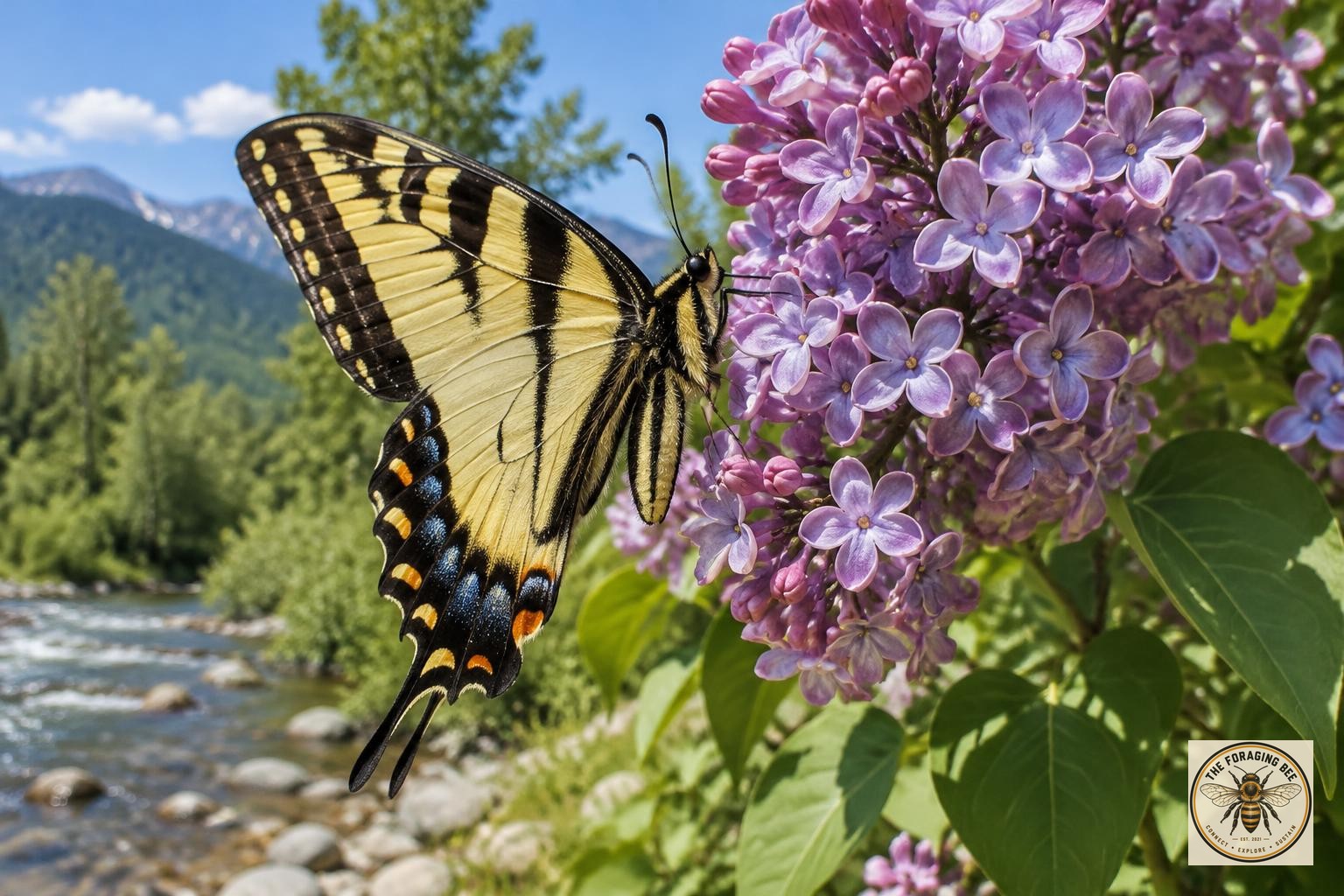
The western tiger swallowtail (Papilio rutulus) is one of the largest and most noticeable butterflies in southern British Columbia. In late spring and summer it glides along creeks, river valleys, orchards and town gardens across the Okanagan–Similkameen–Princeton region. Not every pollinator is a bee, and this golden butterfly is a fine teacher of that truth.
HOW TO IDENTIFY IT
• Size: large—a wingspan roughly the width of your hand. • Wings: bright yellow with bold black "tiger" stripes running across them. • Edges: black wing borders with a row of yellow spots. • Tails: a long tail on each hind wing, with small blue and orange spots near the tails. • Flight: strong, floating glides, often along water or treelines. • Caterpillar: young caterpillars look like bird droppings; older ones turn green with two big false eye spots that scare off birds.
LIFE CYCLE: COMPLETE CHANGE
Egg. The female lays single round green eggs on the leaves of host trees such as willow, cottonwood, aspen and alder.
Caterpillar. The caterpillar eats leaves and grows, shedding its skin several times. It spins a silk pad on a leaf and folds the leaf over itself as a shelter.
Chrysalis. When fully grown it forms a chrysalis that looks like a twig or dead leaf. In our region, the last generation of the year spends the winter as a chrysalis.
Adult. In late spring the adult emerges, dries its wings and begins sipping nectar. In our climate there is usually one main flight each year, from about late May into July, depending on elevation and season.
WHY IT MATTERS TO OUR PLANET
Swallowtails sip nectar with a long tongue and carry pollen on their legs and bodies from flower to flower, especially between wildflowers spread far apart. Their caterpillars are food for birds raising chicks. A creek lined with willows and cottonwoods full of swallowtails is a sign of healthy riparian (streamside) habitat—the same habitat that cleans our water and shelters wildlife.
HOW YOU CAN HELP
• Protect willows, cottonwoods and aspens along creeks; they are the caterpillars' nursery. • Plant nectar flowers: lilac, milkweed, phlox, bee balm and native wildflowers. • Leave fallen leaves and twigs under trees in autumn—chrysalises may be wintering there. • Avoid pesticides and "bug zappers." • Let wet, muddy spots stay; butterflies gather there to drink minerals.
THE 4H VIEW
Harmony is wider than the hive. When the same valley feeds honey bees, native bees and butterflies, the land is in balance—and so are we, when we slow down long enough to notice.
FIELD NOTE
Write down your first swallowtail of the year. Kids love keeping this record, and it becomes a simple yearly check on the health of your local creek.
Sources and boundaries
BC distribution and species details.
Identification, host plants and flight season.
Habitat and conservation guidance for butterflies.