
4H Method
Wintering the 4H Way: Moisture Kills Bees, Not Cold
A healthy colony can shoulder real cold. What it cannot survive is a wet hive. How to winter with heavy natural stores, a respected propolis envelope and dry air — and why the bees' own preparations matter more than ours.
Mark Vanderende · October 22, 2026
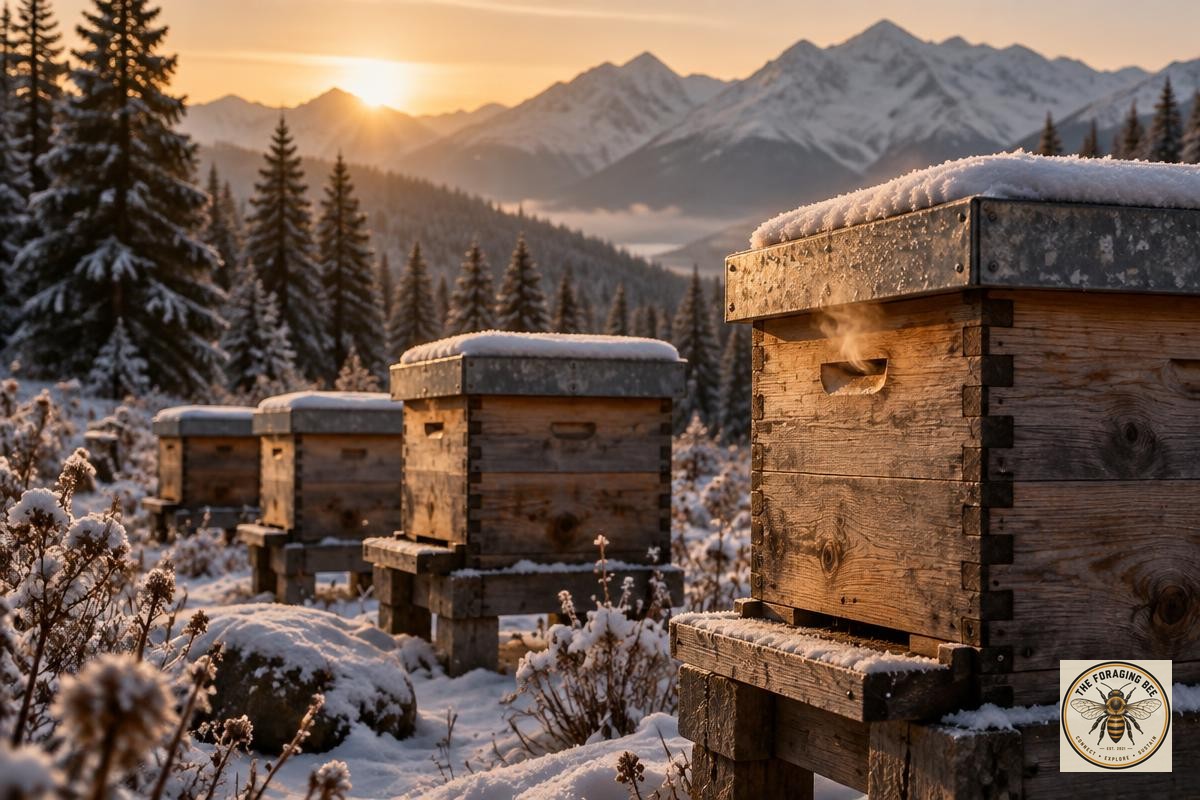
COLD IS NOT THE ENEMY
Ask around and most people assume winter kills bees because of the cold. It is a natural guess, and it is mostly wrong. A healthy, well-fed honey bee colony is remarkably good at cold. The bees cluster, shiver their flight muscles and hold a warm core through weather that would stop us at the door. Bees do not heat the whole hive; they heat themselves, and they are very good at it.
What a colony cannot shrug off is wet. Cold bees can warm themselves. Cold, wet bees cannot. In the 4H way, wintering is not a battle against the thermometer. It is the management of moisture, food and calm — three things we can genuinely help with, and three things we can just as easily ruin.
WHY MOISTURE IS THE REAL KILLER
Bees eat honey to make heat, and digesting honey releases water vapour. A winter cluster breathes out warm, moist air all season long. That warm air rises, meets the cold inner surfaces of the hive — the lid, the upper walls — and condenses. Now you have liquid water inside a box full of bees.
Condensation above the cluster drips back down onto the bees. Wet bees lose heat fast, far faster than dry bees in far colder air. Damp comb grows mould. Damp honey can ferment. A colony that entered winter strong can be weakened, chilled and lost by spring — not because the night was cold, but because the hive was wet.
This is why experienced beekeepers repeat the old truth: moisture kills bees, not cold. The goal is never to seal the hive warm and tight. The goal is dry, still air around a well-fed cluster.
HEAVY FIRST: FOOD IS WINTER HEAT
Every winter plan starts with Heavy. The cluster's furnace burns honey, and a colony cannot manage moisture or temperature on an empty stomach. Before winter, each hive needs abundant natural stores of its own — not a last-minute rescue, but real reserves left where the bees put them.
• Heft or weigh each hive and compare it with the equipment, colony size and expected winter length for your yard. • Take only a true surplus at harvest; the bees' winter share comes first, always. • A light colony needs prompt, individual attention — not a note to check again in spring. • Record what you left, so spring tells you the truth about your judgement.
A heavy, dry hive in a cold yard will usually outperform a light, wet hive in a mild one. Food and dryness work together; neither can be traded for the other.
RESPECT THE PROPOLIS ENVELOPE
Walk up to a feral colony in a tree hollow and you will find the walls coated in propolis — the resinous varnish bees gather from buds and bark and lay down across their home. Researchers call this the propolis envelope, and it is part of the colony's own defence system.
Published field studies have found that colonies with a restored propolis envelope show lower activity of some immune genes and lower levels of some pathogens — as if the envelope lets the colony stand down from constant immune alert. Rough, unfinished interior wood encourages bees to build this layer; smooth, planed, painted surfaces discourage it.
So when we prepare equipment for winter, the 4H rule is simple: respect the envelope.
• Do not scrape propolis from interior walls as housekeeping. Remove only what genuinely prevents a safe, weather-tight fit. • Favour rough-sawn, untreated interior surfaces when building or buying woodware, so the bees can keep their envelope working. • Leave the bees' own sealing of cracks and drafts in place unless it blocks a safe inspection or creates a real problem.
One honest boundary, and it matters: propolis is a supporting condition, not a cure. Field research has not shown that a propolis envelope controls Varroa or guarantees winter survival. Keep your mite monitoring honest, watch for disease, and never let a beautiful propolis wall talk you out of a count you needed to do. Propolis helps the bees help themselves. It does not replace the beekeeper's eyes.
KEEP THE AIR DRY, NOT THE HIVE TIGHT
Moisture management is where the beekeeper earns their keep. The aim is to let moist air leave and keep liquid water from ever settling on the cluster.
• Give moist air a way out and away from the cluster — the exact setup depends on your equipment and your climate, so learn what works in your own yard and write it down. • Keep the hive out of standing water and soggy ground; a damp site feeds a damp hive. • Shield the entrance from driving weather and keep it clear of dead bees and snow blockages, so the colony can breathe and take cleansing flights on mild days. • Resist the urge to wrap a hive into a sealed parcel. Trapped moisture inside insulation is still trapped moisture.
Every yard is different. Princeton's dry cold and Delta's wet coastal cold ask different things of the same bees. That is why 4H teaches reading your own conditions rather than copying a stranger's winter recipe from another climate.
HAPPY THROUGH WINTER: CALM IS A WINTER RESOURCE
A winter cluster is a living engine running on stored fuel. Every needless disturbance — banging the hive, prying it open on a cold day, repeated checks out of worry — costs the bees heat, honey and calm. Happy in winter means leaving them alone with confidence.
Your winter tools are quiet ones: the heft of the hive from the back, a cleared entrance after a storm, a listen at the wall on a mild day, and the notes you took in autumn. Save the opening for a genuine reason and a suitable day. The colony you do not disturb is doing its winter work.
THE SPRING AUDIT TELLS THE TRUTH
Wintering is not finished when the snow melts. At the first suitable check, record what actually happened: stores remaining, cluster size, queen status, moisture signs inside the hive, mould, and which setups stayed driest. Compare yards, queen lines and equipment honestly.
That record is how a method improves. A colony that came through strong on its own honey, dry and calm, is the standard to breed from and the practice to repeat. A loss is not a failure to hide — it is a lesson to write down.
THE 4H WINTER, IN ONE BREATH
Happy: a calm, undisturbed cluster. Healthy: honest mite and disease monitoring, and a propolis envelope left to do its quiet work. Heavy: abundant natural stores left where the bees put them. Harmony: a hive worked with the local climate, not against it.
Keep them dry, keep them fed, keep them calm — and let the bees do what millions of winters taught them.
Connect • Explore • Sustain.
Read these signals
- • Hive weight and capped stores
- • Condensation or mould inside the lid
- • Entrance clear after storms
- • Cluster sounds on mild days
Sources and boundaries
Field experiment: rough-sawn interiors produced the most wall propolis; some pathogen detections were lower. It did not find better overall survival — propolis is support, not a guarantee.
Colonies with an envelope showed seasonally lower immune-gene activity and lower levels of some pathogens — health markers, not proof of prevented winter loss.
Direct field comparison found no significant reduction in Varroa or virus levels from a natural envelope. The essential boundary: propolis is not mite control.
Review finding clearest support for antimicrobial and social-immunity effects. Laboratory activity does not always become a colony-level outcome.