The Foraging Bee master sealThe Foraging BeeConnect · Explore · Sustain
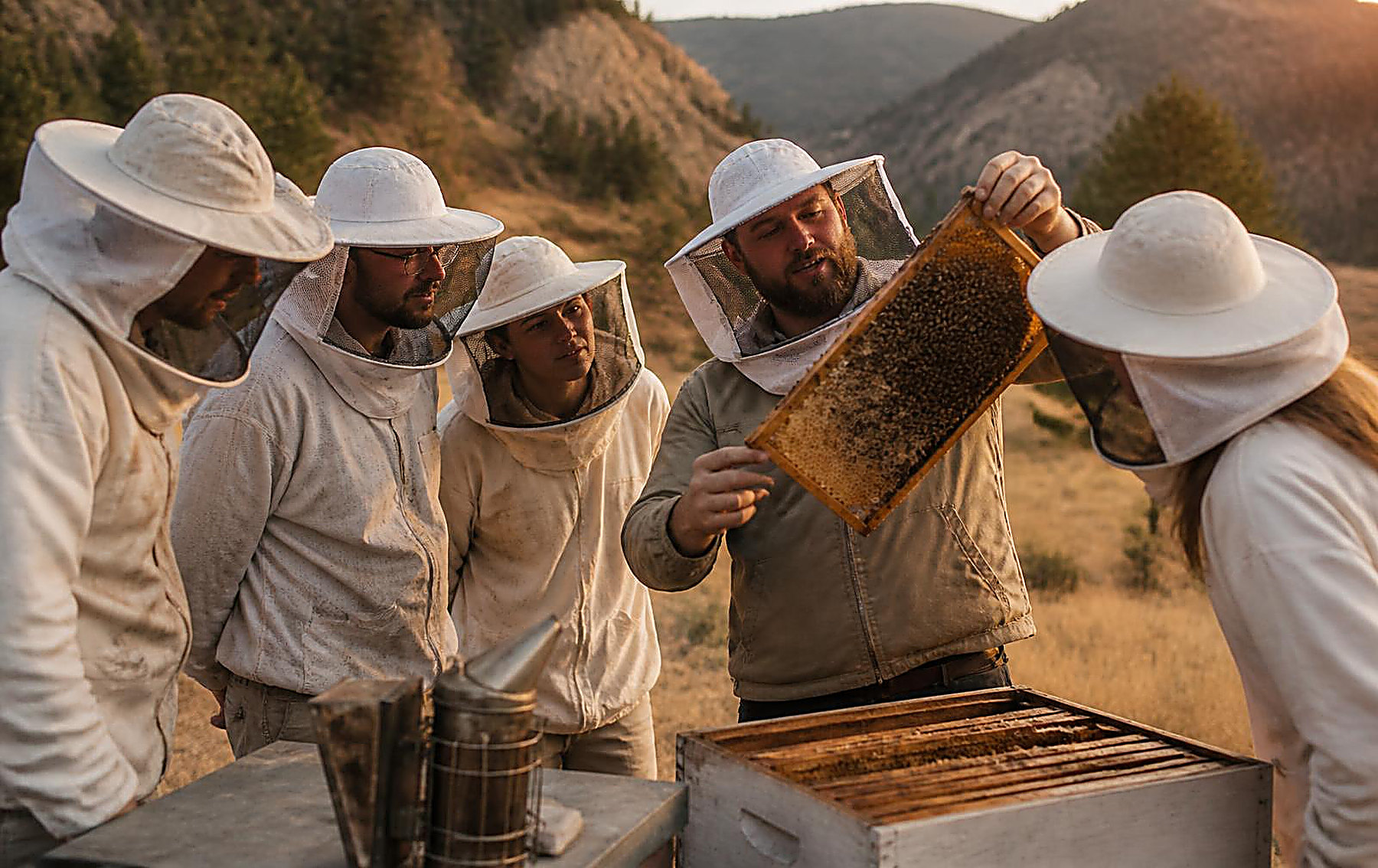
Master beekeeper Mark Vanderende presenting a frame of bees to an audience at a Similkameen valley speaking event

Keynotes · Workshops · Classroom Visits

The Hive Awakening — on stage.

From keynote halls to classrooms, Mark Vanderende brings thirty seasons at the hive entrance to every audience. Expect hard-won honesty, big laughs, and a simple rule: have fun with your bees.

Signature Keynotes

Two talks that define the work.

These are the cornerstone keynotes — the ones that open conferences, close banquet nights, and bring bee clubs back for a second booking.

Signature Keynote

The Art and Science of Beekeeping

A 30-year love letter to the superorganism

Honest, funny, and grounded in field experience. Big ideas told through small moments at the hive entrance.

Best for

Adult clubsAgricultural conferencesCorporate teamsTrade shows

What they'll learn

  • How to read a colony's mood before you open the lid
  • The simple 3H standard — Happy, Healthy, Heavy — and why it works
  • Why observation beats intervention in a thriving yard
  • Stories from catastrophic rookie fails to hard-won success

Signature Keynote

Never Buy Bees Again

From Buckfast Abbey to the Similkameen — a sustainable apiary built on queen rearing

Direct, systems-focused, and fiercely practical. A roadmap for beekeepers who want resilience over rescue, rooted in two of modern beekeeping's most important teachers.

Best for

Beekeeping associationsIntermediate beekeepersSustainability groupsFarmers' institutes

What they'll learn

  • Brother Adam's seventy-year lesson at Buckfast Abbey: resistance is heritable, and the beekeeper is the selection pressure
  • Michael Palmer's nucleus-yard economics — why overwintered nucs replace packages, losses and increase at once
  • Why queen rearing is the single skill that closes the loop on a sustainable apiary
  • How to score colonies honestly, cull favourites without sentiment, and breed from survivors instead of catalogues
  • A practical path off the package-bee treadmill for yards of any size

The Lineage

Two teachers, one closed loop.

“Never Buy Bees Again” is not a slogan — it is a system. It starts with Brother Adam's disciplined breeding at Buckfast Abbey and finds its working structure in Michael Palmer's sustainable nucleus-yard model. Queen rearing is where the two meet.

Buckfast Abbey

Brother Adam

After acarine disease levelled the Abbey hives in 1919, Brother Adam spent seventy years proving that resistance is selectable. His Buckfast method — a closed population scored against written traits — shows beekeepers how to become the selection pressure in their own yards.

  • Score colonies, don't just admire them
  • Wintering thrift and disease resistance before honey yield
  • Cull the favourite queen when the data says so

The Sustainable Apiary

Michael Palmer

Michael Palmer reframed the apiary as a self-funding organism: raise overwintered nucs from your own stock, let them cover your losses and supply your increase, and the yard stops depending on annual packages shipped from the south.

  • The nucleus yard as insurance, inventory and classroom
  • Local overwintered stock outperforms imported packages
  • Selection happens in your own winter, not a southern breeder's

Queen rearing is the hinge.

Brother Adam gives us the standard. Michael Palmer gives us the yard structure. Queen rearing is the skill that connects them — turning local survivors into next season's breeders, and a buying habit into a breeding programme.

Talk Themes by Audience

Something for every room.

Every talk is tailored to the age, experience and curiosity in front of me. Here is the menu — mix, match, or request a custom theme.

Adults, Clubs & Corporate

Keynotes built for audiences who want substance, story and laughter.

  • Have Fun with Your Bees

    Why joy is a management strategy — and the best colonies are kept by people who still smile.

  • From Brood Nest to Boardroom

    Leadership lessons from the superorganism: communication, adaptability and collective purpose.

  • Big Fails, Big Successes

    A beekeeper's confessional: the mistakes that taught the most, told with wit and honesty.

  • Reading a Valley

    Climate, forage and resilience — what the land tells us before the bees do.

  • The 3H Standard in Life and Hives

    Happy, Healthy, Heavy as a framework for decisions beyond beekeeping.

Schools & Youth Groups

Interactive talks that turn classrooms into apiaries for an hour.

  • Pollinators Feed the World

    Students connect bees, food and biodiversity through local examples they can see and taste.

  • The Secret Life of a Hive

    Roles of the queen, workers and drones — and what a colony can teach us about cooperation.

  • Bee a Habitat Hero

    Simple schoolyard and garden actions that help wild pollinators thrive.

  • From Flower to Jar

    The journey of honey: nectar, hive, harvest and why every batch tastes like a place.

Kids & Creative Clubs

Playful, memorable titles designed to hook young imaginations and the teachers who book them.

  • Buzz, Bumbles & the Honey Factory

    Kids meet the hive cast, try on gear, and learn why bees are the original engineers.

  • Bee Detectives: Solve the Hive Mystery

    Use clues from smell, sound and comb to figure out what a colony needs.

  • Waggle Dance Party

    How bees talk with dance — with a movement game kids won't forget.

  • Super Bee Snacks

    Taste honey, explore pollen, and discover why bee bread is a tiny superfood.

  • Build a Bee Hotel

    A hands-on craft that sends kids home as pollinator protectors.

Workshop Add-Ons

Turn a talk into an experience.

Add hands-on elements to any keynote or classroom visit. These work as stand-alone stations, post-talk activities, or full-day builds.

Build a custom visit

Live Observation Hive

A safe, enclosed colony brought to your venue. Watch the queen, brood and honey up close.

Best for: Schools, libraries, fairs and corporate wellness events

Hands-On Hive Demo

An outdoor or indoor demonstration with frames, tools, smokers and suits your audience can handle.

Best for: Clubs, field days and team-building sessions

Honey Tasting Flight

Sample single-origin Similkameen honeys while learning how floral sources shape flavour.

Best for: Corporate receptions, agri-tourism events and dinner talks

Mentorship Q&A

An open-ask session for beekeepers — beginner to intermediate — with season-specific guidance.

Best for: Bee clubs and association meetings

Printable Take-Home Pack

Custom activity sheets, checklists and recipes aligned to your group's age and interest.

Best for: Schools, youth clubs and homeschool co-ops

Outcomes by Level

What audiences take away.

Every talk ends with clear, age-appropriate takeaways — not just inspiration, but something useful to remember and share.

Kids 5–10

  • Name the three types of bees in a colony
  • Explain how flowers and pollinators depend on each other
  • Identify one safe way to help bees at home or school
  • Leave curious, unafraid and excited to share what they learned

Youth 11–18

  • Understand colony biology and the role of the queen
  • Connect bee health to climate, forage and human choices
  • Practice observation skills using the LISTEN protocol
  • Consider beekeeping, ecology or agriculture as a future path

Adults & Beekeepers

  • Apply the 3H standard to real colony decisions
  • Build a seasonal management plan for their own yards
  • Evaluate when to intervene and when to stand back
  • Leave with practical notes, not just inspiration

Corporate & Clubs

  • Draw clear parallels between hive behaviour and team dynamics
  • Discuss resilience, communication and adaptive leadership
  • Enjoy a memorable, off-screen experience that sparks conversation
  • Receive follow-up resources for continued learning

Book the Hive Awakening

Bring the bees to your stage, school or boardroom.

Available throughout the Similkameen and by travel arrangement to Vancouver, Kelowna, the Okanagan and beyond. Travel is quoted based on distance and setup requirements.

Questions? Email mvanderende71@gmail.com