The Foraging Bee master sealThe Foraging BeeConnect · Explore · Sustain
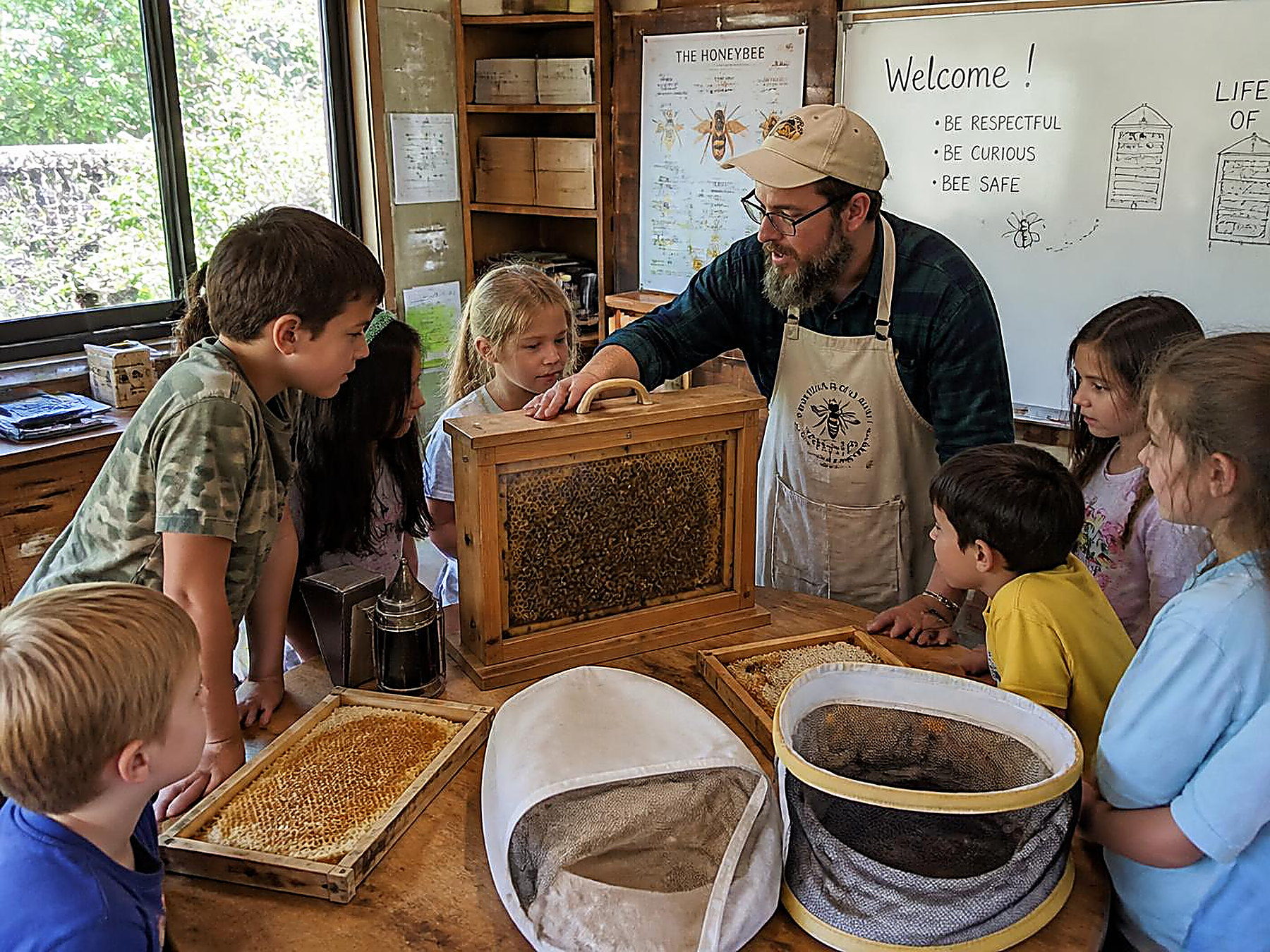
Master beekeeper showing a glass observation hive to schoolchildren gathered around a classroom table

Schools · Youth Groups · Similkameen to Vancouver & the Okanagan

Youth & Kids Bee Program

The bees come to you. A live observation hive and a table of real props turn your classroom into an apiary for a morning — tuned to the grade in front of us.

A real colony, at eye level, in your room.

Mark Vanderende brings a sealed glass observation hive, bee-free comb, a beekeeper's kit and a set of kid-sized veils. Nothing is a slideshow. Students watch the queen lay, hold capped honey, try on a jacket, and leave able to explain what a colony actually does — the same 3H and LISTEN language taught to adult beginners, scaled down honestly rather than dumbed down.

Sessions run in classrooms, libraries, scout halls and community centres across Princeton and the Similkameen Valley, and we travel to Vancouver, Kelowna and the Okanagan and beyond — travel is quoted on top of the session fee. Booking, dates and group sizes are handled on the in-class booking page.

Safety & logistics

  • Observation hive is fully sealed — no loose bees, no stings.
  • Allergy and EpiPen protocols confirmed with staff before arrival.
  • First-aid kit on site; tasting is always opt-in.
  • Needs one table, floor space and roughly 15 minutes to set up.

Curriculum fit

Maps to BC Science big ideas on life cycles, ecosystems, biodiversity and sustainability, plus Applied Design and Food Studies at the senior grades. Teachers get the outcome list ahead of the visit for their own planning.

Age ranges & learning outcomes

Four bands, four sets of outcomes

Every session is built around one band. Mixed-age groups get the middle band with the senior extensions offered to whoever wants them.

Ages 5–7 · K–Grade 2

Meet the bees

Session length · 45–60 minutes

  • Name the three bees in a colony — queen, worker, drone
  • Find the queen in the observation hive with a guide
  • Explain in their own words why bees visit flowers
  • Practise calm, safe behaviour around a hive
Ages 8–10 · Grades 3–5

How a colony works

Session length · 60–75 minutes

  • Trace the life cycle from egg to capped brood on real comb
  • Read a frame: brood, pollen, nectar and capped honey
  • Connect pollination to food they ate this week
  • Describe one job a beekeeper does in each season

Ages 11–13 · Grades 6–8

The superorganism

Session length · 75–90 minutes

  • Explain the hive as one organism holding 35 °C brood temperature
  • Interpret the waggle dance as distance-and-direction data
  • Identify varroa mites and why mite load matters
  • Run a simplified LISTEN observation and record notes

Ages 14–18 · Grades 9–12

Field science & careers

Session length · 90 minutes–half day

  • Score a colony against the 3H standard — Happy, Healthy, Heavy
  • Do the math on an alcohol-wash mite count and treatment thresholds
  • Debate local pollinator pressures in the Similkameen Valley
  • Map pathways into apiculture, agriculture and food science
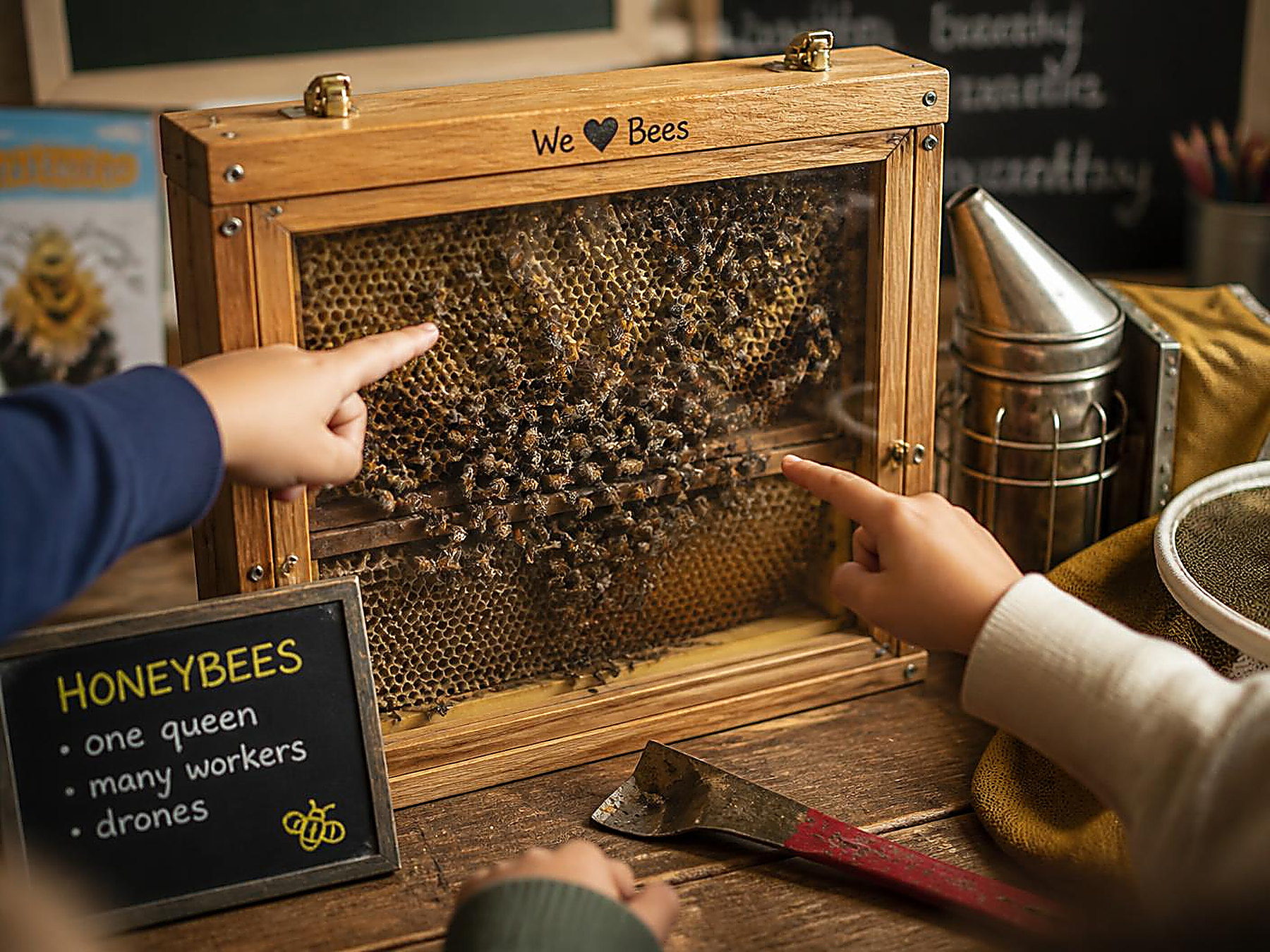
Children pointing at live honeybees on comb inside a wooden glass observation hive beside a smoker and hive tool
The observation hive travels in a hard case and sits on a single classroom table.

What they'll use

Props on the table

  • Glass observation hiveA framed, fully sealed two-frame colony. Live bees, brood and the queen, safe behind glass — no veils required, nothing gets out.
  • Real drawn comb & capped honey framesBee-free frames students can hold: worker brood, drone cells, pollen bands and capped honey, so they see the pattern up close.
  • Kid-sized veils and jacketsA rotating set students try on, plus gloves and a hive tool to handle.
  • Cold smoker & beekeeper kitAn unlit smoker, hive tool, frame grip and uncapping fork demonstrated hands-on.
  • Hive box cutawayA deep box, frames, queen excluder and lid, assembled and taken apart by the class in order.
  • Pollen, wax and honey tasting flightSingle-yard Princeton honey, raw pollen and beeswax — smell and taste, with allergy protocols confirmed in advance.
  • Waggle-dance floor mapA printed forage map students walk to dance directions to a nectar source.
  • Take-home field cardsOne card per student: the three bees, the seasons, and how to plant for pollinators.

Next step

Pick a date for your group

Choose a visit date, tell us your group size and how long you have us for. Mark confirms from the yard within two days.

Open the in-class booking