Beeginner Beekeeping
12. Through Winter and Into Spring: Learn, Reflect, Repeat
Keep winter checks purposeful, respond to food risk and review the first season honestly. Spring recovery—not a single sunny flight—completes the story.
Mark Vanderende · October 29, 2026
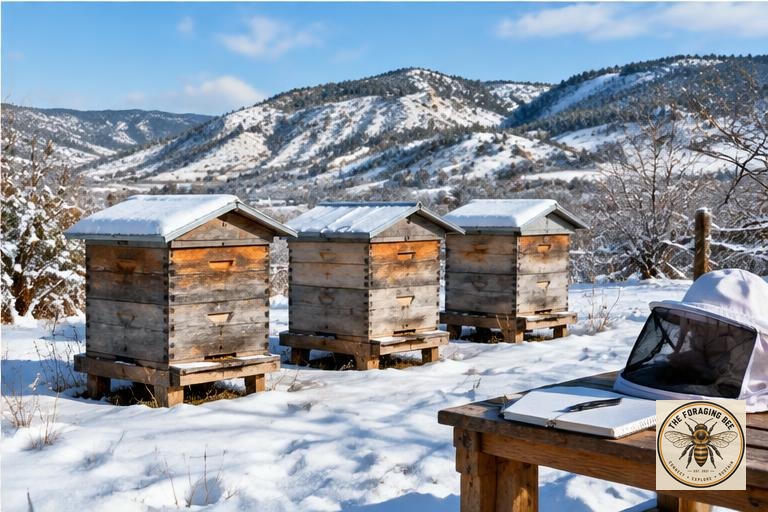
WINTER CARE CAN BE QUIET
The work now is often outside the box. Check storm damage, roof security and entrance access without jolting the colony. Notice suitable-weather flight and compare it with the conditions. A quiet hive on a cold day is not evidence that you should open it, and one sunny flight is not proof that the whole colony is thriving.
Follow usable food risk with the least disruptive reliable method appropriate to the conditions. Keep the same method and equipment context in your records. Sound, warmth and heft each provide limited clues; they do not reveal everything about food position, brood or health. Avoid curiosity inspections that sacrifice warmth without answering a necessary question.
ACT WHEN THE EVIDENCE DEMANDS IT
If stores appear dangerously low, equipment has failed or there are other urgent signs, contact skilled local help promptly. Winter restraint does not mean ignoring starvation. A colony may have honey it cannot readily reach in cold conditions; a heavy box is not the whole answer.
Do not dismantle a cold brood nest or transfer food and frames from colonies of uncertain health on your own. The appropriate response depends on conditions and diagnosis. Keep protection and personal safety in mind on icy ground as well as around the bees.
SPRING FINISHES THE FIRST-SEASON STORY
As flight and reliable forage return, assess recovery under suitable conditions. Look for developing population, queen performance through brood evidence, usable food and current health information. Survivorship alone does not establish breeder quality, and a single spring read cannot prove that a queen line is resilient.
Review the source of your bees alongside their care and environment. If the colony struggled or died, investigate without pretending one convenient explanation is proven. Do not redistribute suspect comb or equipment before the cause and safe handling are addressed. Ask for help and record both what is known and what remains uncertain.
THE CLOSED LOOP BEGINS AGAIN
Read the notebook from the first plan to the spring outcome. Which flowers mattered? When did food stop growing? What action helped? Which assumption was wrong? Repair woodware and adjust next season’s plan from evidence. Queen rearing, the supervised 10-over-10 cell builder and planned healthy nucs can become later learning goals when you have the skill and colony resources.
MAKE ROOM FOR THE JOY
Have Fun With your Bees the 4H Natural Way is not a promise of an easy year. It is a way to enjoy learning while accepting responsibility. Share what you discovered, notice the other pollinators and carry the patience of the bee yard into everyday life.
YOUR NEXT STEP
Write one success, one unanswered question and one change for next season. Your first winter is a goal; understanding what happened is the beginning of becoming a better beekeeper. Connect • Explore • Sustain.
YOUR 4H COMPASS
4H stands for Happy, Healthy, Heavy and Harmony. It is Mark’s way of natural, treatment-free beekeeping: four guiding principles for understanding bees, caring for them and living more attentively alongside nature.
Harmony — work with nature
Read blooms, weather and the wider landscape. Respect other pollinators and let the land’s capacity guide the apiary, rather than forcing it to fit a calendar.
THE LEARNING JOURNEY CONTINUES
The science helps us understand bees, nutrition, reproduction and the seasons. The art is learning to notice, act with care and recognise when to leave the colony undisturbed. Hive Awakening connects that knowledge with nature and personal wellness: slowing down, finding perspective and carrying patience into life beyond the apiary. It is a journey of awareness, not a medical promise or a requirement to share a belief.
Closed-loop does not mean sealed-off genetics or guaranteed survival. Open-mated queens may mate with outside drones; protect genetic diversity, monitor health and respond promptly when a colony needs help. Hive work and woodworking need appropriate protection and skilled supervision; children learn alongside a guardian.
Read these signals
- • Storm damage and entrance access
- • Remaining food risk
- • Spring recovery
Sources and boundaries
Check current registration, identification, sale and movement requirements, plus the local rules for your property.
Supports known-health sourcing, careful introductions, food and environmental care. Official guidance is broader than Mark’s treatment-free approach; it does not establish guaranteed survival.
Reliable monitoring and records matter. The province also recommends control when indicated; this series does not claim that nonintervention is safe or prescribe a treatment.
Food, nursing bees, queen performance and environment affect growth. Older guidance provides biological context, not a universal June schedule or winter-food target.