Beeginner Beekeeping
11. Prepare a Winter Home, Not Just a Wrap
Bring stores, health, population, wind protection and moisture management together. Adapt the setup to your colony and actual winter site.
Mark Vanderende · October 29, 2026
BRING THE WHOLE READ TOGETHER
Winter preparation is not a single wrapping day. Food, health and population need attention while the colony is still developing. A secure cover cannot fix insufficient stores or a serious late-season mite burden. Review what the summer notes actually show before calling the hive ready.
Ask whether the bees occupy an appropriate space, whether health evidence is current and whether usable food is sufficient and accessible. Check queen performance through suitable evidence gathered earlier; do not hunt for her in the cold just to complete a list. Uncertainty about a major problem calls for local help, not a reassuring label.
COLD AND MOISTURE BOTH MATTER
Bees generate warmth and moisture as they use food. Cold, dampness, wind and an unsuitable hive setup can interact. Protect the colony from rain and uncontrolled drafts while providing moisture management appropriate to the climate and equipment. “More ventilation” and “seal every opening” are not universal answers.
Discuss insulation, roof condition, drainage and controlled air movement with a beekeeper experienced in a comparable site. A warmer valley yard and an exposed Princeton hillside may need different arrangements. Do not copy a specific vent or wrap arrangement without understanding what problem it is meant to solve.
CHECK THE HOME WITHOUT TEARING IT APART
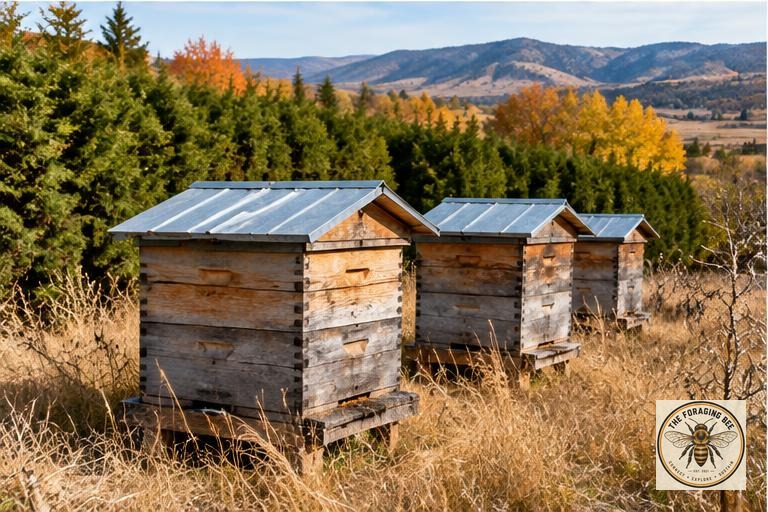
Secure the stand and roof, confirm rain runs away from the hive and inspect equipment condition. Plan suitable entrance access and locally appropriate pest protection without trapping the bees. Keep the propolis lining intact where practical. Avoid late unnecessary scraping and repeated dismantling that disturb a home the colony has prepared.
Set up a safe winter access route. Think about snow clearing, checking storm damage and reading food trends without shaking the colony. A visit should have a clear purpose and stop when that purpose is met.
LEAVE ROOM FOR WHAT YOU DO NOT KNOW
Winter-ready is a reasoned judgement, not a survival certificate. Weather, food access and health can still change. Record what has been confirmed and what needs follow-up. A scorecard can support this record, but a high total never cancels an urgent sign or an individual score of 1.
YOUR NEXT STEP
Review the winter setup with a local mentor before severe conditions arrive. Write a short check plan: after storms, during suitable food-assessment windows and whenever there is credible evidence of danger. Preparation should let you visit calmly, not keep opening the colony in anxiety.
YOUR 4H COMPASS
4H stands for Happy, Healthy, Heavy and Harmony. It is Mark’s way of natural, treatment-free beekeeping: four guiding principles for understanding bees, caring for them and living more attentively alongside nature.
Harmony — work with nature
Read blooms, weather and the wider landscape. Respect other pollinators and let the land’s capacity guide the apiary, rather than forcing it to fit a calendar.
Read these signals
- • Roof and stand condition
- • Wind and moisture
- • Readiness before cold
Sources and boundaries
Check current registration, identification, sale and movement requirements, plus the local rules for your property.
Supports known-health sourcing, careful introductions, food and environmental care. Official guidance is broader than Mark’s treatment-free approach; it does not establish guaranteed survival.
Reliable monitoring and records matter. The province also recommends control when indicated; this series does not claim that nonintervention is safe or prescribe a treatment.
Food, nursing bees, queen performance and environment affect growth. Older guidance provides biological context, not a universal June schedule or winter-food target.