One jar = 1.1 million flowers
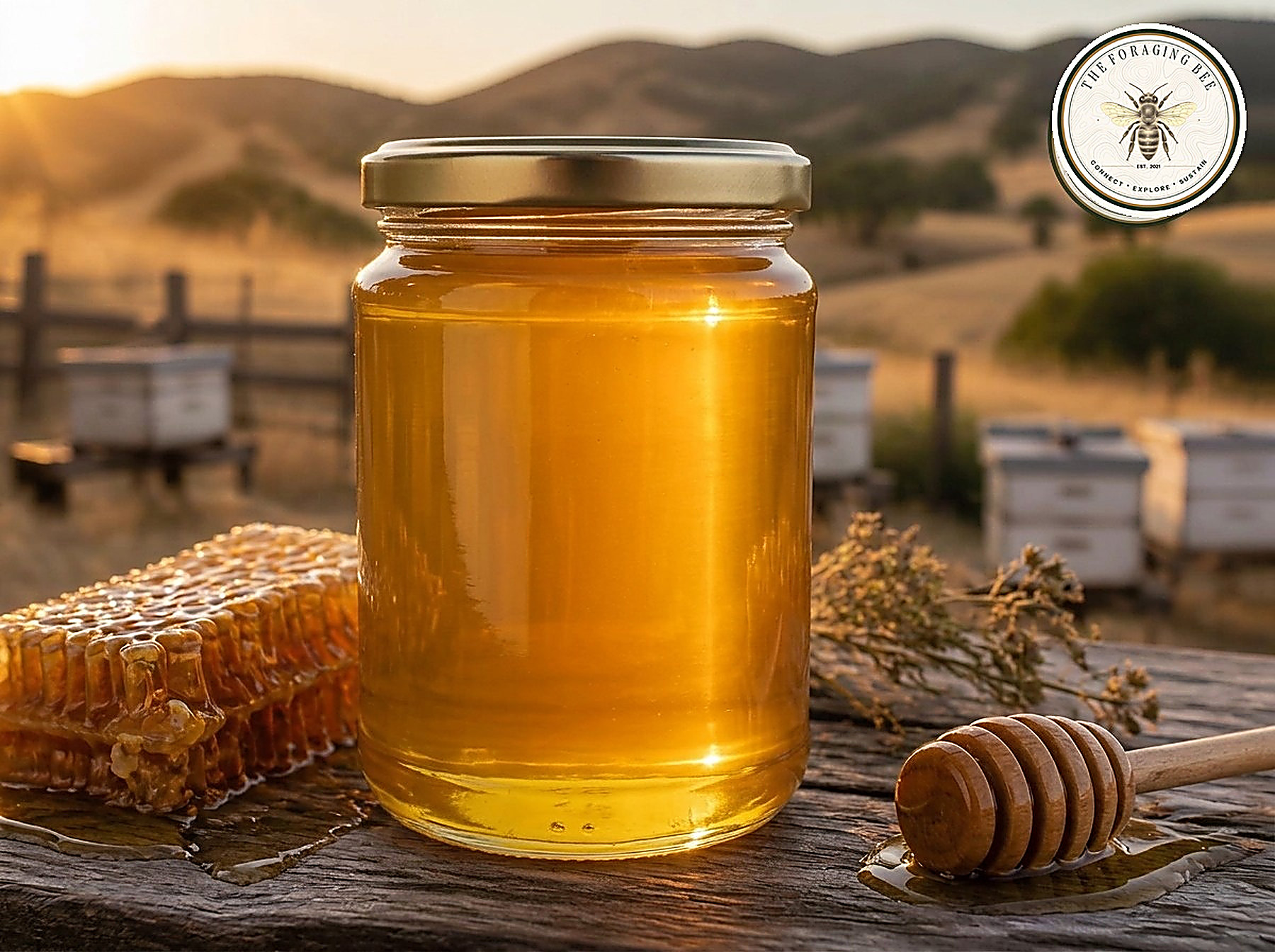
A 500 g jar of Princeton Valley Gold represents roughly 1.1 million flower visits and about 88,000 km of flight — more than twice around the planet.
Scan to source · Batch PVG-2026-07
This page identifies the apiary, harvest, moisture and floral sources behind your jar of Princeton Valley Gold raw honey.
The code on your lid
Opens this page
Floral Fingerprint
Pollen counts from a sample drawn at extraction, cross-checked against the bench bloom calendar we keep for every yard. Hover or tap a wedge for the story behind it.
Alfalfa
Irrigated ranch hay fields on the valley floor — the body and the butter note.
Spotted Knapweed
Dry benchland invader that bees adore; brings the pepper and the slow crystal set.
Wild Clover
Roadside and pasture margins — the light, clean finish.
Fireweed
Burn regrowth above the treeline; water-white and delicate.
Rabbitbrush & Sage
Late-season sagebrush bench bloom, faintly resinous.
Saskatoon & Wild Rose
Early June draw held over in the brood-chamber margins.
Dandelion
Spring build-up carry-over — heavy, quick to granulate.
Mixed Wildflower
Everything else the bench had blooming that week.
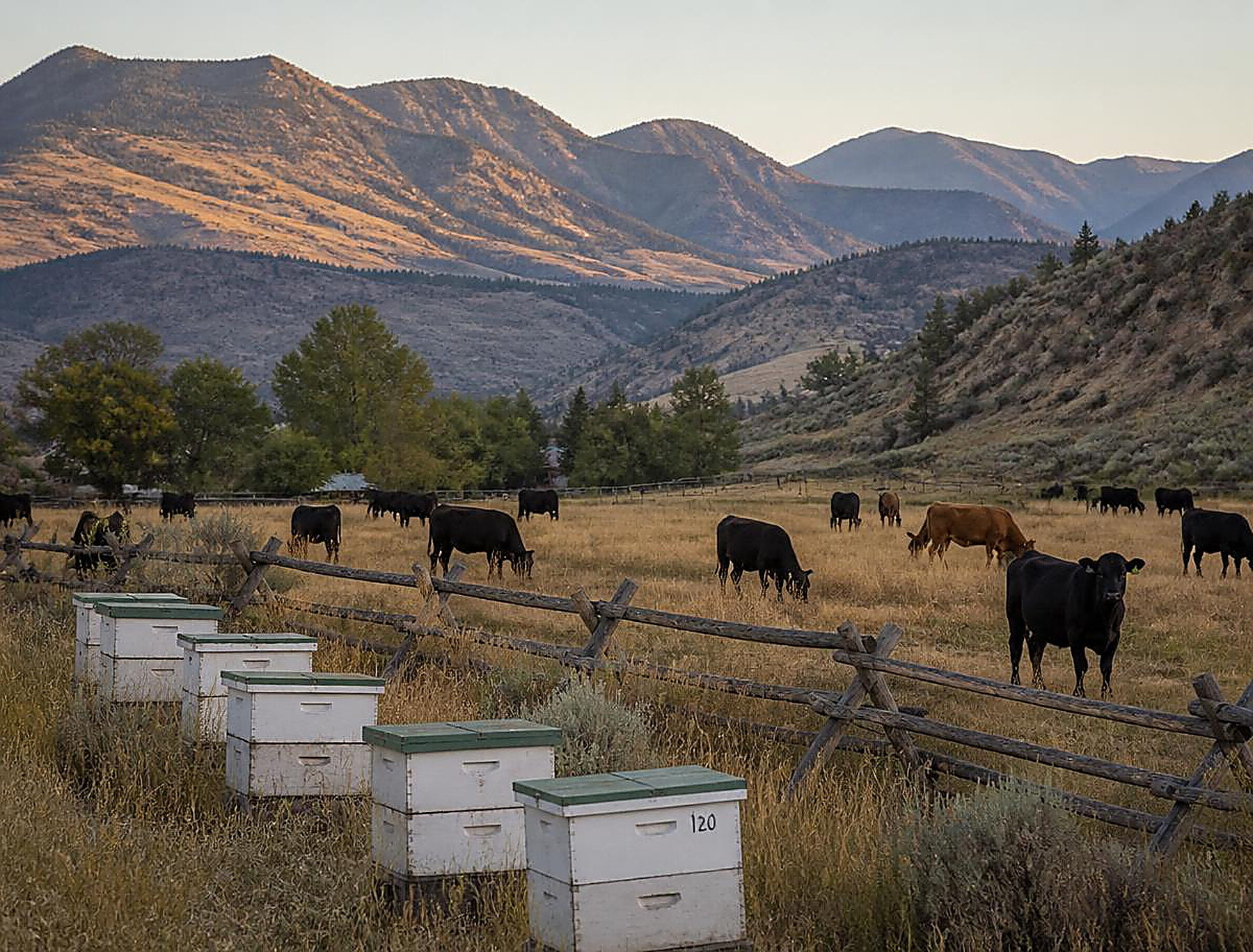
The Yard
“Butter and hay up front, a peppery knapweed mid-palate, clean clover finish that stays short.”
Your Honey Will Go Solid — Good.
Honey is a supersaturated sugar solution — roughly 70% sugars in only 17% water. That is far more sugar than water can hold, so it is chemically desperate to return to a stable state. It does that by dropping its glucose out of solution as crystals. Crystallization is not spoilage, fermentation, added sugar or a fault. It is the single best proof that honey was never pasteurized or ultra-filtered.
How it happens
Why speeds differ
The glucose-to-fructose ratio decides the speed. Dandelion and canola honey can set in days. Knapweed, fireweed and acacia can stay liquid for a year. This batch is a mid-set honey and typically starts to grain at 8–14 weeks.
Bringing it back
The Hive Superfood
Bee bread is pollen the bees have packed into a comb cell, capped with honey and left to lacto-ferment. That fermentation breaks the tough pollen exine wall, drops the pH and multiplies the bioavailability of the amino acids, B vitamins and enzymes inside. It is the colony's protein store — and one of the most nutrient-dense foods on the planet.
You need
Start with a quarter teaspoon if you have never taken hive products. Not for infants under one year, or for anyone with a known bee-product allergy.
Method
Eat it like this
Crazy Honeybee Facts
A 500 g jar of Princeton Valley Gold represents roughly 1.1 million flower visits and about 88,000 km of flight — more than twice around the planet.
Low water activity plus bee-added glucose oxidase makes honey self-preserving. Edible 3,000-year-old honey has been recovered from Egyptian tombs.
The waggle dance encodes direction relative to the sun and distance in dance duration — and different subspecies use measurably different distance scales.
Bees regulate active brood temperature around 34–35 °C; broodless winter clusters behave differently. We treat the colony as a single superorganism, which is why the 4H standard grades the whole hive, not single frames.
A queen mates with 12–20 drones in a handful of flights, stores that sperm for life, and can lay her own body weight in eggs every day at peak.
Honeybees see ultraviolet, so many flowers carry UV nectar guides — landing strips invisible to us but blazing to them.
Spring 2027 · Princeton Apiaries
Jar-holder specials
Valley Gold + Wildflower Pollen + your choice of salve — bundled at market rate.
Single-origin pulls sell out. The list gets word before the shelf does.
From the same hives