
Beeginner Beekeeping
2. Choose a Home for Your Bees
Plan a sheltered, accessible bee yard with water, useful forage and room for neighbours. Check local rules before the bees arrive.
Mark Vanderende · October 29, 2026
WALK THE PLACE FIRST
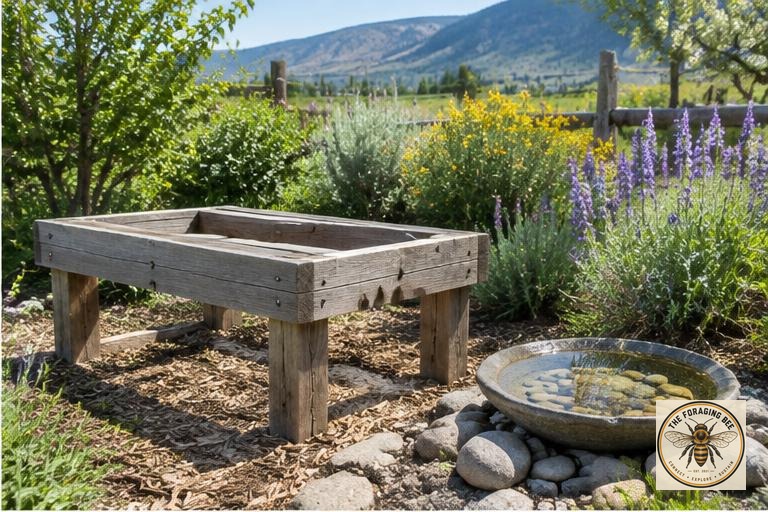
Stand where you imagine the hive, then walk the surrounding ground. Notice morning sun, wind, summer heat, runoff and the route you would use while carrying equipment. Choose a stable, well-drained position with practical shelter and safe access. A pretty corner is not useful if it floods, becomes inaccessible in snow or sends bees across a busy doorway.
Look beyond the property line. Bees forage over the surrounding landscape, not just your garden. Ask what blooms through spring, summer and autumn, and what happens during drought. In the Okanagan–Similkameen–Princeton region, elevation, irrigation and exposure can change the season substantially. Nearby flowers are an invitation to observe, not proof that food will always be available.
BE A GOOD NEIGHBOUR
Keep flight paths away from people, pets and public paths. A suitable fence or hedge may help direct flight, but it is not a substitute for lawful siting or manageable bees. Discuss practical arrangements with neighbours. Think about children visiting, dogs running through the yard and anyone who may need a safe alternative to approaching the colony.
Provide a dependable clean water source with safe landing surfaces before bees establish a habit elsewhere. Maintain it, rather than leaving an occasional bucket. Do not set out exposed honey or communal feed: robbing creates conflict and can spread pests and disease. Local rules and skilled advice should shape any food intervention.
CHECK THE RULES BEFORE THE ORDER
In BC, beekeepers and apiaries must be registered. Check current provincial requirements, required apiary identification, and the local rules for your actual property. Provincial registration does not establish permission under municipal or regional land-use rules. Ask about sale and movement authorization when arranging the bees; do not assume that every location described as Okanagan is in the same legal bee district.
PLAN FOR WINTER NOW
Imagine the same site during a cold wind or thaw. Where does roof water drain? Can you check the entrance without jolting the hive? Is the stand secure? Winter planning starts with the home, not with a wrap purchased in autumn.
YOUR NEXT STEP
Sketch the stand, flight path, water and access route. Write down the local authority or inspector you consulted and the questions still unanswered. Choose the site only when it serves the bees and the people around them.
YOUR 4H COMPASS
4H stands for Happy, Healthy, Heavy and Harmony. It is Mark’s way of natural, treatment-free beekeeping: four guiding principles for understanding bees, caring for them and living more attentively alongside nature.
Harmony — work with nature
Read blooms, weather and the wider landscape. Respect other pollinators and let the land’s capacity guide the apiary, rather than forcing it to fit a calendar.
Read these signals
- • Wind and sun exposure
- • Flight paths
- • Water and forage
Sources and boundaries
Check current registration, identification, sale and movement requirements, plus the local rules for your property.
Supports known-health sourcing, careful introductions, food and environmental care. Official guidance is broader than Mark’s treatment-free approach; it does not establish guaranteed survival.
Reliable monitoring and records matter. The province also recommends control when indicated; this series does not claim that nonintervention is safe or prescribe a treatment.
Food, nursing bees, queen performance and environment affect growth. Older guidance provides biological context, not a universal June schedule or winter-food target.