Beeginner Beekeeping
10. Heavy Comes First: Leave Their Winter Honey
Decide what the colony must keep before considering what you can take. Plan reachable reserves for your site and accept a no-harvest first season.
Mark Vanderende · October 29, 2026
THE BEES HAVE FIRST CLAIM
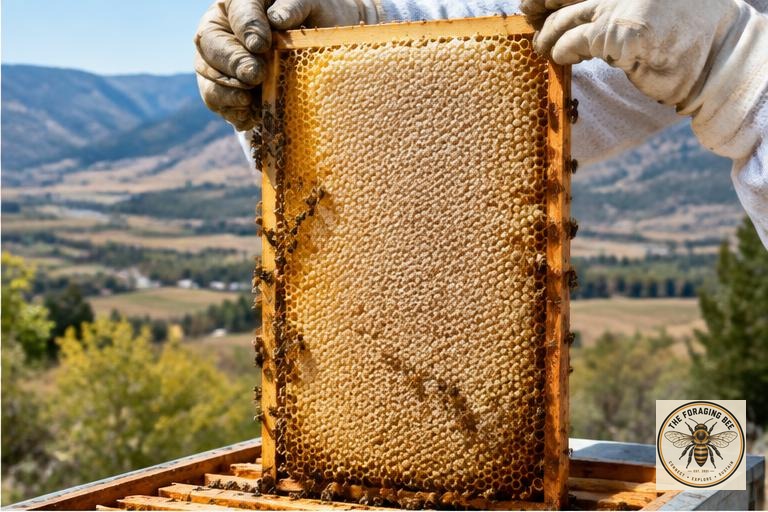
A frame of capped honey is beautiful, but it is not automatically yours. The colony needs energy through the remaining growing season, flight gaps, winter warmth and the period before dependable spring forage. For a June start, that may mean keeping all of the crop.
Make the harvest decision after a credible reserves assessment, not before. Look at the colony’s development, equipment, usable stores, local forage and likely winter conditions with a mentor. A first-season no-harvest decision is successful care when it leaves the bees better prepared. You can celebrate learning without extracting honey.
HEAVY MEANS USABLE FOOD
Learn consistent safe hefting or weighing and record the equipment configuration. Woodenware, extra boxes and a wet roof all add weight without adding food. One heavy lift cannot show how much suitable honey is available or whether it is accessible to the winter cluster.
Food position matters in cold conditions. Bees may not be able to move readily across a gap to reach distant reserves. Ask an experienced local beekeeper to assess stores arrangement while conditions still allow appropriate work. Preserve brood continuity and pollen nutrition; do not rearrange a cold brood nest to satisfy a late measurement.
THERE IS NO SINGLE VALLEY TARGET
A reserve plan should fit colony size, hive design, winter duration, elevation, exposure and spring forage. Do not copy one weight from an online post and assume it proves readiness everywhere in the Okanagan–Similkameen–Princeton region. Use local experience and the colony’s actual evidence to set your plan.
Leave enough for foreseeable uncertainty, not merely enough to reach a date on paper. Follow the food trend after any harvest decision. A good summer can be followed by a long gap, and a growing colony can consume reserves faster than expected.
IF THE PLAN IS FALLING SHORT
Stop taking food and ask for help while there is time to act. The objective of own-honey wintering is thoughtful provisioning, not testing whether a starving colony will prove a belief. Responsible contingency care must suit health status, local rules and the situation. Do not transfer unverified honey or food from suspect colonies.
YOUR NEXT STEP
Write down what you assessed, the local basis for the reserve plan and when you will reassess. If no genuine surplus remains, leave the jars empty and the colony supplied. Heavy supports Happy and Healthy; all three must work together.
YOUR 4H COMPASS
4H stands for Happy, Healthy, Heavy and Harmony. It is Mark’s way of natural, treatment-free beekeeping: four guiding principles for understanding bees, caring for them and living more attentively alongside nature.
Heavy — leave enough for the bees
Understand honey as energy and pollen as nourishment. Protect their food through seasonal gaps and winter; take only a genuine honey surplus.
Read these signals
- • Usable honey reserves
- • Food placement
- • No-harvest decision
Sources and boundaries
Check current registration, identification, sale and movement requirements, plus the local rules for your property.
Supports known-health sourcing, careful introductions, food and environmental care. Official guidance is broader than Mark’s treatment-free approach; it does not establish guaranteed survival.
Reliable monitoring and records matter. The province also recommends control when indicated; this series does not claim that nonintervention is safe or prescribe a treatment.
Food, nursing bees, queen performance and environment affect growth. Older guidance provides biological context, not a universal June schedule or winter-food target.