Learning Objectives
- Assess Happy, Healthy, Heavy, Harmony using colony evidence, not harvest alone.
- Explain LISTEN — Look, Inspect, Sound, Touch, Evaluate, Navigate — without confusing it with an inspection checklist.
- Record surplus, winter stores, mite pressure, queen line, winter survival and spring population together.
- Recognize when observation is enough and when timely, responsible action is needed.
Field infographic
LISTEN — the six management principles
A colony-first decision framework, not a six-step sensory inspection.
- L
Leave
Leave the brood nest uninterrupted unless a question requires opening it.
- I
Integrate
Use natural comb and foundationless architecture where appropriate.
- S
Select
Choose locally adapted survivor queens after checking spring results.
- T
Trust
Preserve the propolis envelope; it cannot replace mite monitoring.
- E
Embrace
Use splits, brood breaks and measured mechanical management.
- N
Notice
Observe, record and act responsibly when the colony needs help.
4H: Happy, Healthy, Heavy, Harmony — a surplus only after abundant winter stores and a strong spring return.
Diagram
Worker honeybee anatomy
Tap a marker to learn the part, then switch to quiz mode and name each one.
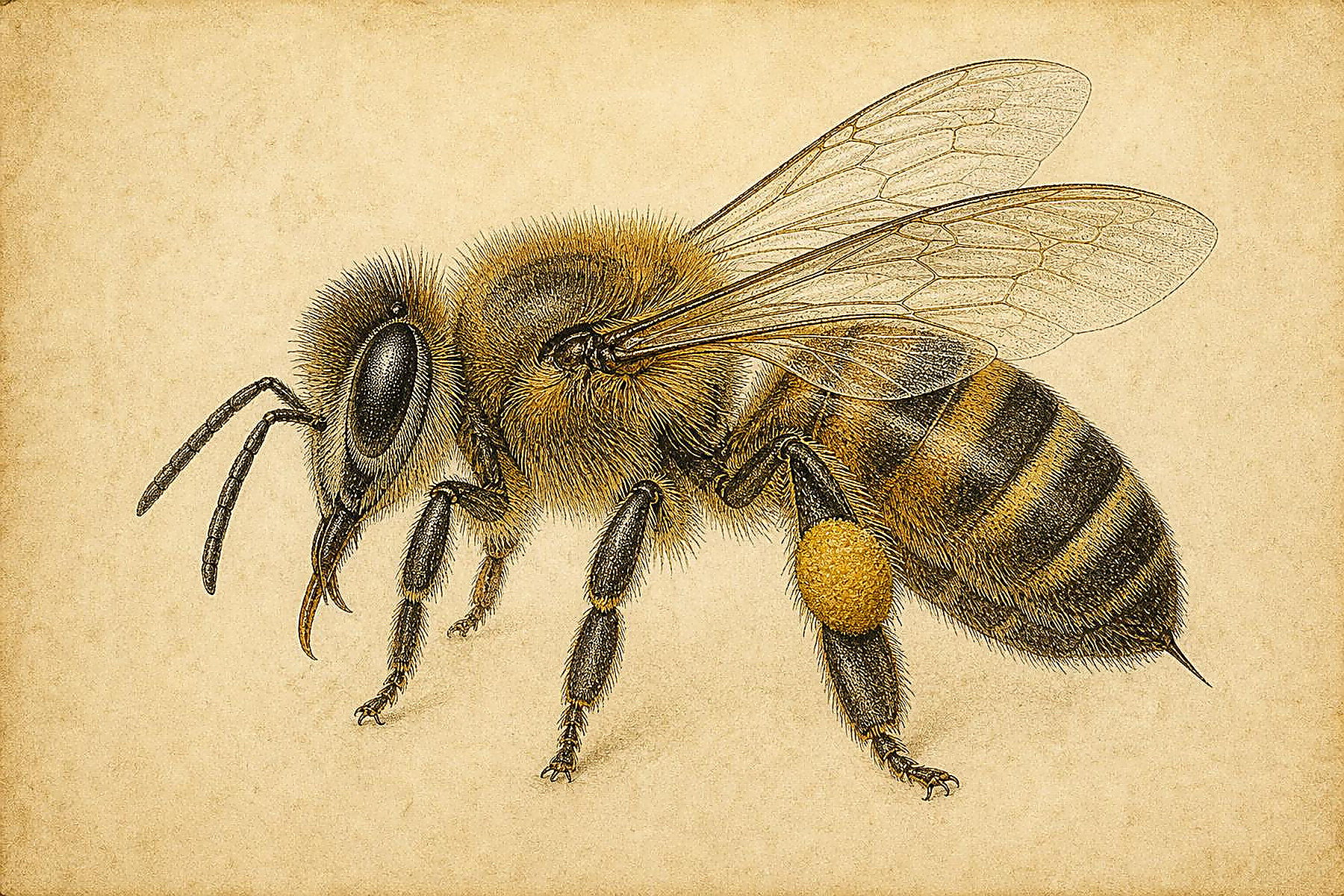
Marker 1
Antennae
Smell, touch and air movement — how she reads the comb in the dark.
Head senses and feeds · thorax powers flight · abdomen stores, builds and defends.
Reading mode
4H is Happy, Healthy, Heavy and Harmony: purposeful colony behaviour, measured health, abundant natural winter stores before any surplus harvest, and care that fits local forage, microclimate and native pollinators. Follow winter survival and spring recovery under locally adapted queens, without treating either as guaranteed. Propolis supports the hive environment; it cannot certify health or control Varroa. Monitor honestly and respond promptly when the bees need help.
Judge the whole outcome
- Happy — room, forage and calm behaviour, without needless disturbance. Temperament is one clue, not the entire verdict.
- Healthy — sound brood, strong new-bee population, measured mite pressure and locally adapted queens selected after winter. Propolis supports social immunity; it cannot certify health.
- Harmony — read local forage, microclimate and native pollinators; keep hive numbers within landscape capacity.
- Heavy — a substantial honey surplus only after bees keep abundant winter stores. Record how many bees return in spring, not just how many jars leave in summer.
LISTEN is six evidence-led steps
Observe flight, forage, weight and outer frames first. Enter the brood nest when an unanswered question justifies it. The six letters describe the decisions behind that restraint:
- 1Look — Watch entrance traffic, landings, pollen and the weather. Pollen colours suggest forage variety, not proof of complete nutrition.
- 2Inspect — Read top-bar seams and visible evidence with minimal disturbance. Inspect brood only when a real question warrants it; never hunt for a queen just to prove she is there.
- 3Sound — Listen at the entrance or top notch. Compare the colony with previous visits; a hum or roar alone cannot establish queen status or health.
- 4Touch — Check cover warmth and heft the hive safely. A cover reading cannot prove the brood nest is at 35°C; wear suitable protection and never touch bees to test temperament.
- 5Evaluate — Record Stores, Brood Pattern, Bee Density, Temperament and Hygiene & Health, each 1–5. Unknown evidence stays unscored; a complete audit totals 5–25.
- 6Navigate — If unsure, take a photo safely, close up and seek qualified help. Choose the smallest justified action and a follow-up date; disease or starvation needs prompt attention.
What a field record should capture
- Date, yard, weather, forage and colony identifier; flight and temperament before opening.
- Queen line, brood and new-bee population; mite sampling method, result and trend where indicated.
- Honey harvested, stores remaining, winter survival and spring strength. Mark when a queen was replaced or colonies combined.
- The question, action (or decision to wait), reason and date to review the result.
Honest evidence, not invention claims
4H and HiveVerity organize established observations into a practical record. They are not claims to have invented natural beekeeping or proof that a treatment-free colony will survive. Use the current five-area scorecard, with unknowns left unscored and urgent signs overriding the total.
Printable field card · PDF
The 4H Method — field guide
Four pillars, the six LISTEN steps and the HiveVerity five-area scorecard, with honest evidence limits and a link to the website's research.
Download the card ↓Track your way through the curriculum
Students with a Hive Key get completion ticks, percent-through-track and a resume button across every chapter.
Open the student desk →From Preface — Core Philosophy — 4H & LISTEN