Learning Objectives
- Configure standard Langstroth woodware respecting the 3/8-inch (9.5 mm) bee space.
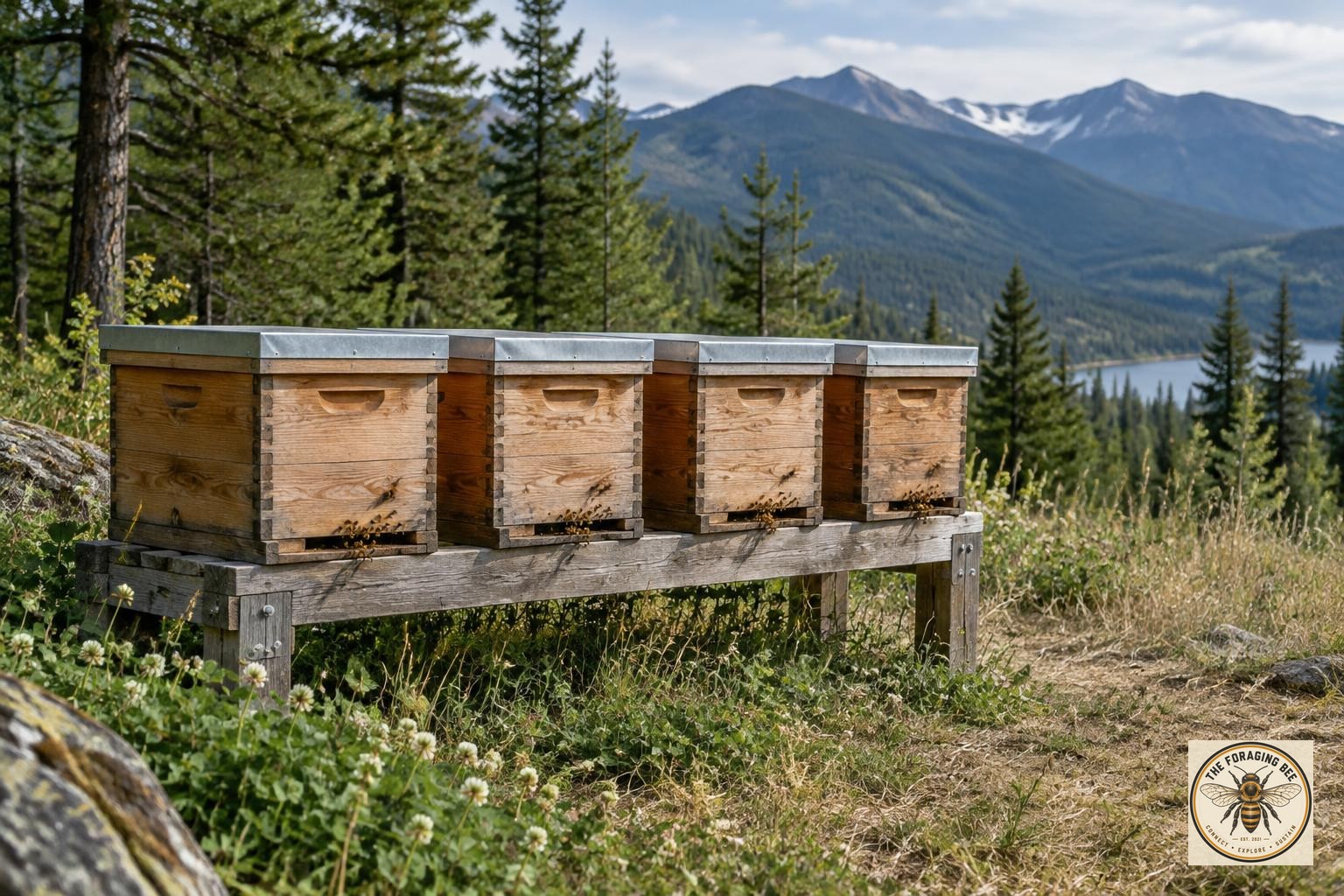
- Build insulated double nucs that share cluster heat through a Similkameen winter.
- Run continuous brood-factory colonies to supply splits, cell builders and cash sales.
- Calculate how many overwintered nucs your operation needs to be self-replacing.
- Read a nuc's fall condition well enough to bet on its spring survival.
- Site and label a nuc yard so records stay honest across a whole season.
Field infographic
What a nuc yard buys you
A local nucleus reserve, with 4H and Harmony in the plan.
1 : 2
Nucs per production hive
One overwintered nuc for every two production colonies is a working ratio.
100%
Replaces bought packages
Local stock, mated on your drones, already acclimatised to the valley.
15–20%
Winter loss cover
Dead-outs are refilled in April instead of ordered in February.
Jun–Jul
Build window
Made from the same frames you would otherwise cut out as swarm prevention.
12–14 kg
Stores to winter a nuc
Small colony, small cluster — but never a small pantry.
2 boxes by June
Spring value
A wintered nuc outruns a package by four to six weeks.
Read these first
This chapter assumes the ground covered below. If any of it is unfamiliar, take the detour — the sequence exists so nothing here has to be taken on faith.
Reading mode
A sustainable apiary replaces its own losses. That is the whole philosophy in one sentence, and everything else in this chapter is just the woodware and the arithmetic behind it. If you buy a three-pound package or a nuc from an outside supplier every April, you are not keeping bees — you are renting a colony for a season and hoping the weather cooperates. Ownership means every yard in our operation carries more overwintered five-frame nucs than we expect to need going into spring. Those nucs are the insurance policy against winter loss, the raw material for splits, and the queen bank all in one small, cheap, five-frame box.
A local reserve of home-raised queens and overwintered nucs can reduce dependence on purchased replacements. 4H evaluates health, winter stores, spring return and the landscape’s carrying capacity. This is a management strategy, not a guaranteed survival result.
Why five frames, specifically
Five-frame nucs can be useful replacement colonies when their population, food and shelter fit local winter conditions. A box size alone cannot predict survival. Judge each nuc by its queen, cluster, abundant capped stores, mite pressure and spring return; do not treat a small box as disposable.

Student chapter
The rest of this chapter is behind the hive gate.
You are reading the open preview of "The Five-Frame Nuc Philosophy". The full chapter — about 10 minutes of it, the beginner and advanced sidebars, the printable field cards and the paired Guelph video work all sit behind a Hive Key.
What a Hive Key opens
- Every chapter in full, both reading tracks
- Printable field cards — mite thresholds, feed schedule, queenright
- The Guelph HBRC video library, paired chapter by chapter
- The Princeton season dashboard, twice a month
How to get one
Ask Mark about access to the full lessons. Hands-on workshops are a separate offer: $25 per session for youth and students, $35 for adults. No Hive Key is needed to sign up for a workshop.
Workshop prices & signup →Track your way through the curriculum
Students with a Hive Key get completion ticks, percent-through-track and a resume button across every chapter.
Open the student desk →From Section II — Equipment, Woodware & Apiary Setup