
Learning Objectives
- Explain brood nest homeostasis at 34.5°C and the real cost of breaking it during an inspection.
- Identify the primary pheromone channels — QMP, brood, alarm and orientation — and read their symptoms in the field.
- Map worker age polyethism from cell cleaner through nurse to forager, and its exceptions.
- Apply superorganism thinking to splits, shakes and combines so you do not scramble the labour ladder unnecessarily.
- Protect the August brood cycle that produces long-lived winter bees.
- Distinguish colony-level decisions from individual-bee thinking in day-to-day management.
Field infographic
Colony vital signs
Numbers the superorganism defends before it defends anything else.
34.5 °C
Brood nest temperature
Held within roughly a degree. Chilled brood begins below 32 °C.
21 days
Worker development
Egg 3 · larva 6 · capped 12. Drones 24, queens 16.
~6 weeks
Summer worker lifespan
Winter bees live 4–6 months on fat-body reserves instead.
1,500–2,000/day
Queen laying peak
In a strong Similkameen colony through late May and June.
9-ODA
Queen mandibular pheromone
Suppresses queen cells and worker ovaries. Fades within hours of loss.
~80% → 18%
Nectar to honey
Water driven off by fanning before the cell is capped.
Diagram
Worker honeybee anatomy
Tap a marker to learn the part, then switch to quiz mode and name each one.
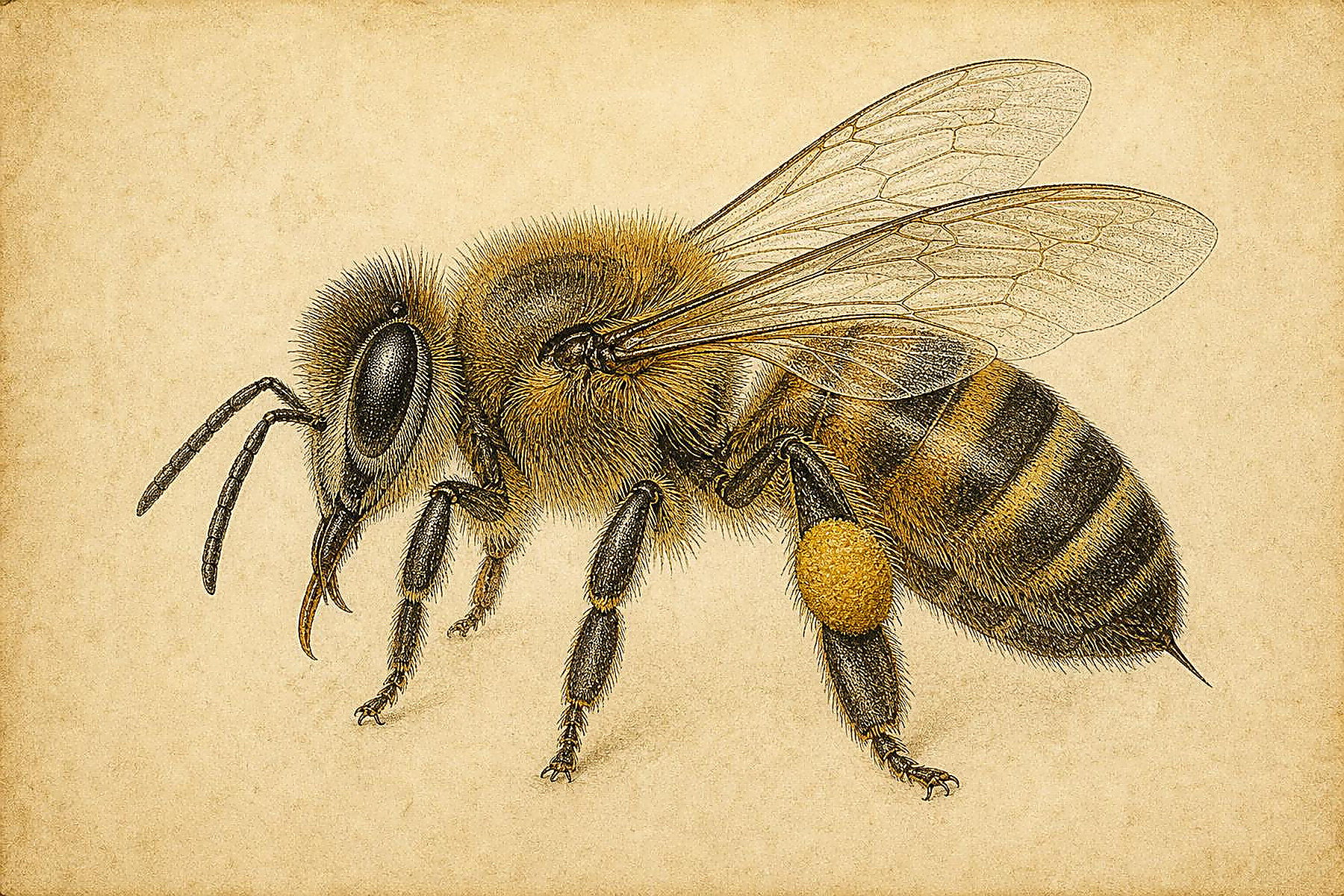
Marker 1
Antennae
Smell, touch and air movement — how she reads the comb in the dark.
Head senses and feeds · thorax powers flight · abdomen stores, builds and defends.
Diagram
Development times by caste
Egg to emerging adult — queen 16 days, worker 21, drone 24. Click a band to read that stage.
Queen
16 days
Fed royal jelly the whole way. Emerges day 16, mates about day 21, lays by day 24.
Worker
21 days
Egg 3 · larva 6 · capped 12. Capped worker brood is flat and biscuit-coloured.
Drone
24 days
Bullet-shaped domed cappings. No sting, no foraging — mating only.
Learn these three numbers first — almost every field decision is timed off them.
Reading mode
Individual bees are disposable. The colony is not. A worker bee in June lives roughly five to six weeks and is built to burn out; the colony she belongs to may be older than you are. Once you manage the superorganism instead of the insect, most beginner mistakes disappear on their own — you stop panicking over a few dead bees on the landing board and start reading whether the whole organism is thriving.
This chapter treats the hive as one animal: a thermostat, a chemical nervous system and a labour force that reassigns itself by age and need. Everything a beekeeper does — smoke, lift a frame, add a box, remove a queen — is an intervention into that single organism, and it responds as one.
The 34.5°C thermostat
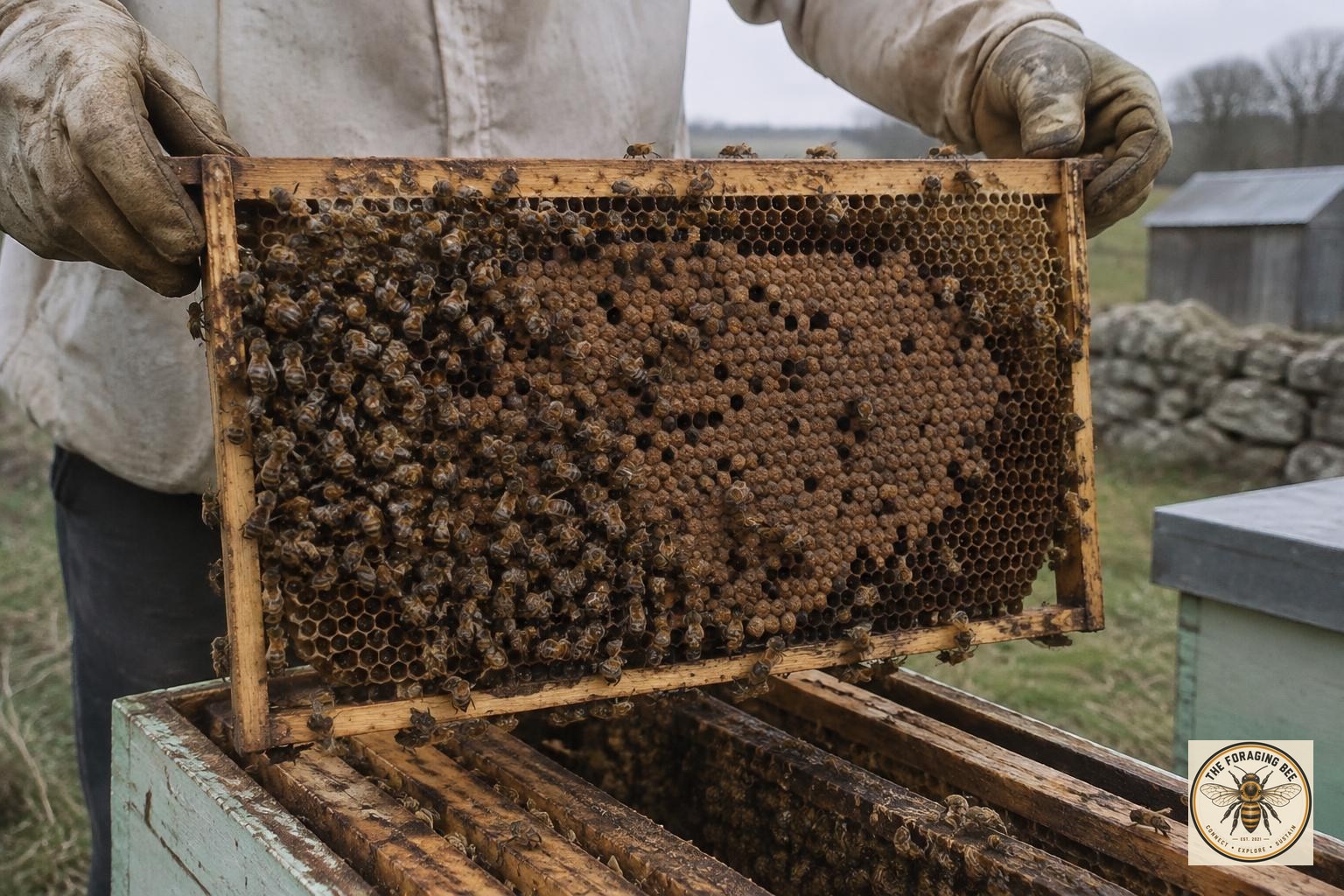
Brood is held within a degree of 34.5°C by shivering flight muscles on the part of hundreds of workers and by evaporative fanning when the nest runs hot. This is not a loose target — brood reared outside the range of roughly 32°C to 36°C shows measurable wing deformity, shortened lifespan and impaired learning as adults, even if it survives to emerge. Every minute a brood frame is out in a cold wind or a hot truck bed is a withdrawal from that thermal account, paid back later in colony performance you will never trace to the cause.
- Work brood frames over the open box whenever possible, so a dropped bee or a chilled patch falls back into the warm colony, not onto the ground.
- Keep pulled frames vertical, not laid flat — vertical orientation loses heat more slowly and keeps larvae from slumping in their cells.
- In the Similkameen shoulder seasons — early April and late September — limit full-colony inspections to 8 to 10 minutes total box-open time on days under 16°C.
- On hot July afternoons above 32°C, watch for bearding and open the entrance further rather than opening the brood chamber — the colony is telling you it is managing heat, not asking you to help.

Student chapter
The rest of this chapter is behind the hive gate.
You are reading the open preview of "Reading the Superorganism: Heat, Pheromones and Caste". The full chapter — about 9 minutes of it, the beginner and advanced sidebars, the printable field cards and the paired Guelph video work all sit behind a Hive Key.
What a Hive Key opens
- Every chapter in full, both reading tracks
- Printable field cards — mite thresholds, feed schedule, queenright
- The Guelph HBRC video library, paired chapter by chapter
- The Princeton season dashboard, twice a month
How to get one
Ask Mark about access to the full lessons. Hands-on workshops are a separate offer: $25 per session for youth and students, $35 for adults. No Hive Key is needed to sign up for a workshop.
Workshop prices & signup →Track your way through the curriculum
Students with a Hive Key get completion ticks, percent-through-track and a resume button across every chapter.
Open the student desk →From Section I — Bee Biology, Life Cycles & Regional Wildflowers