
Learning Objectives
- Sequence the Similkameen and southern Okanagan bloom succession from first pollen to late dearth.
- Use indicator plants as concrete triggers for specific management actions, not vague seasonal guesses.
- Locate and account for microclimates that shift the calendar by up to two weeks within a few kilometres.
- Build a per-yard bloom log and use it to override the printed calendar in an unusual year.
- Time supering, splits and mite monitoring to colony and forage cues rather than fixed dates.
- Recognize dearth windows that require checking natural stores regardless of the preceding flow.
Field infographic
Similkameen bloom sequence
Typical Princeton-area timing — shift a week either way for elevation and aspect.
- Late Mar
Willow & aspen
First real pollen. Brood rearing accelerates on it.
- Late Apr
Dandelion
The build-up trigger. Supers and swarm checks start here.
- May
Saskatoon & choke cherry
Strong nectar in a warm spring; the first surplus risk of swarming.
- Jun–Jul
Clover & alfalfa
The main flow. Keep space ahead of the bees or they will stop working.
- Jul–Aug
Fireweed
Higher elevation gold. Weather dependent, always worth chasing.
- Sep
Rabbitbrush & aster
Late pollen that builds the winter bees. Do not steal it.
Dearth windows — early July heat and post-Labour Day — are when robbing and mite crashes start.
Reading mode
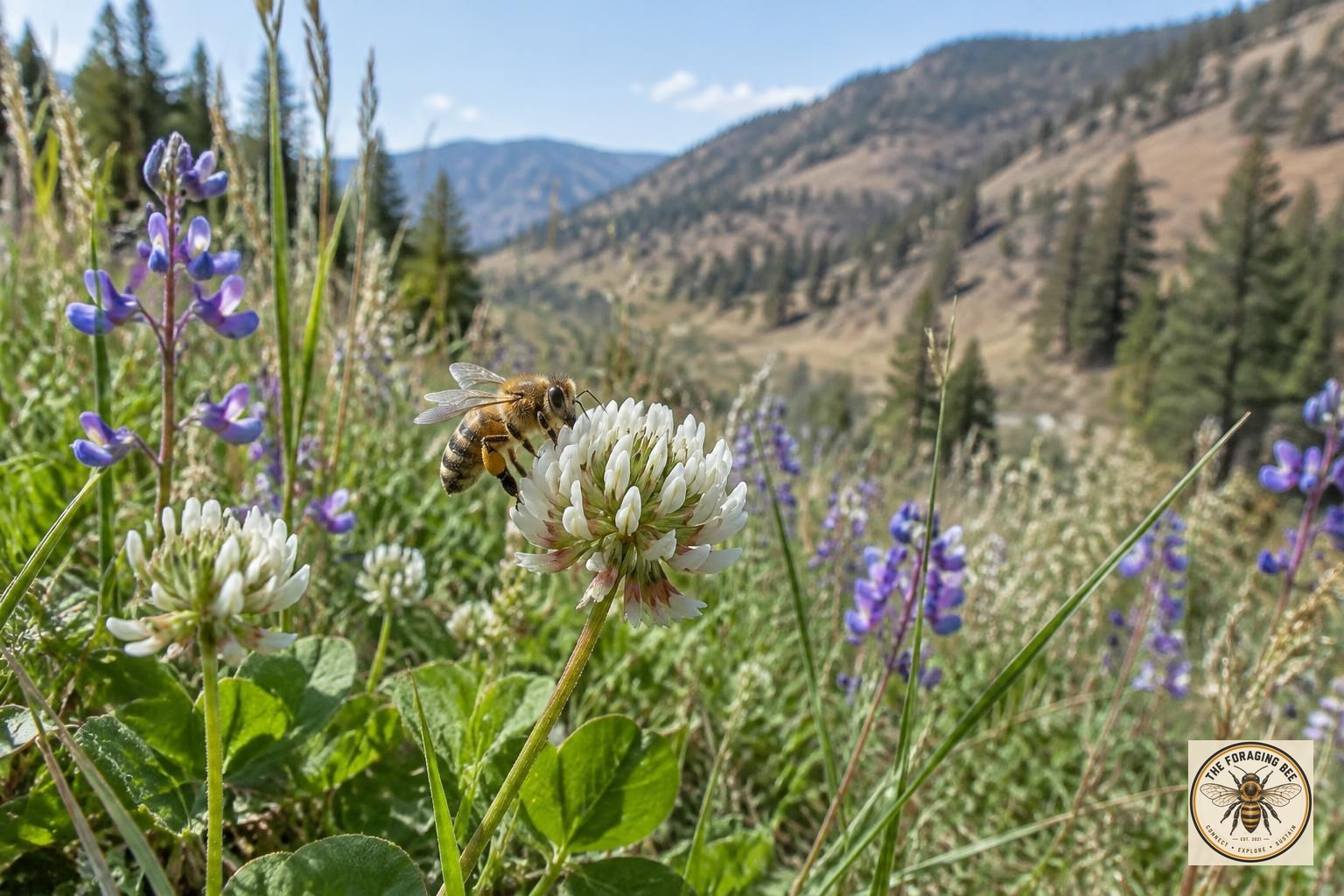
In Princeton the season is written on the benches above the river before it appears in any book, any app or any provincial average. Willow and aspen catkins first, then dandelion carpeting the ditches, then saskatoon and choke cherry along the draws, then alfalfa, sweet clover and fireweed through the working flow, tapering into sage and knapweed on a dry late summer. A beekeeper who manages by the calendar page is always a week behind a beekeeper who manages by what is actually blooming outside the truck window.
This chapter is not a botany lesson for its own sake. Every indicator plant listed here exists because it triggers a specific, dated management action in this apiary. Learn the plants as switches, not scenery.
The Similkameen bloom succession
| Bloom | Typical window | What it signals |
|---|---|---|
| Willow and aspen catkins | Late March – early April | First natural pollen; brood rearing accelerates if weather allows |
| Dandelion | Mid-April – mid-May | Rapid brood nest expansion; crowding risk begins |
| Saskatoon and choke cherry | Late April – mid-May | Swarm pressure window opens; comb-building capacity needed |
| Wild rose and early clover | Late May – early June | Transition nectar; light supering begins in strong colonies |
| Alfalfa and sweet clover | Mid-June – late July | Main flow; heaviest weight gain of the season |
| Fireweed (higher elevation draws) | Late June – August | Secondary flow in wetter or burned areas above the valley floor |
| Sage and knapweed | August | Flow tapering; dearth risk rising through the month |
| Late asters and goldenrod | Late August – September | Final light bloom before autumn feeding period begins |

Student chapter
The rest of this chapter is behind the hive gate.
You are reading the open preview of "The Similkameen Bloom Calendar as a Management Clock". The full chapter — about 9 minutes of it, the beginner and advanced sidebars, the printable field cards and the paired Guelph video work all sit behind a Hive Key.
What a Hive Key opens
- Every chapter in full, both reading tracks
- Printable field cards — mite thresholds, feed schedule, queenright
- The Guelph HBRC video library, paired chapter by chapter
- The Princeton season dashboard, twice a month
How to get one
Ask Mark about access to the full lessons. Hands-on workshops are a separate offer: $25 per session for youth and students, $35 for adults. No Hive Key is needed to sign up for a workshop.
Workshop prices & signup →Track your way through the curriculum
Students with a Hive Key get completion ticks, percent-through-track and a resume button across every chapter.
Open the student desk →From Section I — Bee Biology, Life Cycles & Regional Wildflowers